
The Best Cricket Books Every Fan Should Read
Cricket has always been a game that inspires great writing. From brutal tour diaries to quiet meditations on village greens, these are the books that capture what the game really means — and why every serious fan should have them on their shelf.
There is a theory, probably unprovable but deeply felt by anyone who has spent time around cricket, that the game produces better writing than any other sport. Football has its moments. Boxing too. But cricket — with its long silences, its philosophical pauses, its five-day stretches of drama disguised as nothing happening — seems to demand a certain kind of writer. Patient. Attentive. Willing to sit with something until it reveals itself.
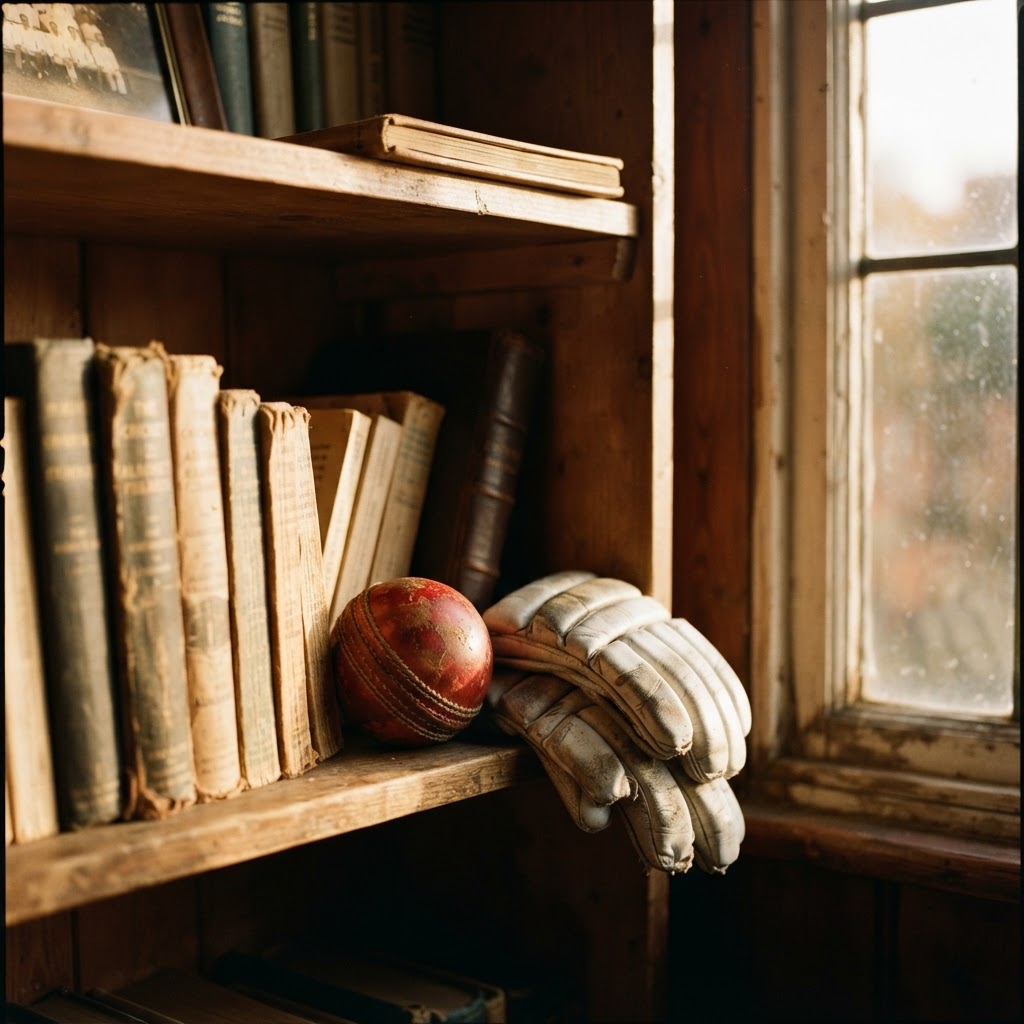
The shelves of any proper cricket fan are usually a mess of scorecards, almanacks, dog-eared paperbacks and hardbacks with broken spines. These books aren't decorative. They've been read on trains to away grounds, in pavilions during rain delays, in bed after long days in the field. They carry the smell of summers past.
With the season winding down, the evenings drawing in and the County Championship delivering its annual round of drama and heartbreak, there is no better time to start building your cricket library. Here are the books that matter — not a definitive list, but an honest one.
Beyond a Boundary — C.L.R. James
If you have read only one cricket book, it is almost certainly this one. If you haven't read it yet, stop what you're doing.
Published in 1963, C.L.R. James's Beyond a Boundary is not really a cricket book at all — or rather, it is so much more than one. It is a meditation on colonialism, identity, class, and what it means to play a game that was handed to you by an empire that considered you lesser. James uses cricket as a lens through which to examine everything: politics, aesthetics, history, dignity.
His writing on batsmen like Frank Worrell has the weight of serious literary criticism. His argument that cricket is an art form — that what a great batsman does belongs in the same conversation as what a great sculptor or painter does — is made with such conviction that you find yourself nodding along before you've even decided whether you agree.
This is a book about more than cricket. But it is also the truest book about cricket ever written. Anyone who dismisses the game as just a game should be handed this and told to come back when they're finished.
Ashes to Ashes — Mike Selvey and Paul Allott (or pick your tour diary)
Every serious cricket fan eventually discovers the tour diary, and once you do, you can't stop reading them. There is something irresistible about the format — the daily grind, the hotel rooms, the internal politics of a touring side, the small moments of brilliance and catastrophe that never make it into the official record.
The best of these books — whether it's Peter Roebuck's brutal honesty, David Gower's reflective accounts, or any number of Ashes diaries from the great battles of the 1980s and 90s — capture cricket at its most human. These aren't polished narratives. They're messy, sometimes contradictory, occasionally unfair. Which is exactly what makes them honest.
For England fans of a certain vintage, the Ashes diaries of the 1980s are particularly compelling reading. They document a period when English cricket was simultaneously glorious and shambolic in equal measure — great individuals surrounded by institutional dysfunction — and they do so with the kind of black humour that only comes from actually being there.
Find your era, find your diary. These books will make you feel like you were in the dressing room.
Fibber in the Heat — Rob Smyth
Not every great cricket book is a classic of the form. Some are great because they are funny, self-aware, and completely unpretentious about what they're doing. Rob Smyth's Fibber in the Heat — an account of England's 2001-02 tour of India — is one of those books.
Smyth went as a supporter, not a journalist, and the perspective makes all the difference. This is cricket writing from the stands and the streets, not the press box. It is about the experience of following the game — the chaos of Indian cricket grounds, the intensity of local fans, the strange intimacy of being a travelling supporter far from home.
What it captures, more than anything, is that cricket is not just something that happens on the pitch. The game exists in the spaces around it too: in the conversations on the way to the ground, in the tea shops, in the long evenings debating what just happened and what it means. Smyth understood that before most cricket writers did.
Batting on the Ruins — Scyld Berry
Scyld Berry has been writing about cricket for decades, and his accumulated wisdom has a particular quality — he never mistakes the surface for the substance. This collection of essays and reporting from across a long career in cricket journalism rewards slow reading. You can open it at any page and find something worth sitting with.
What Berry does better than almost anyone is place cricket in context — historical, geographical, cultural. He understands that a county ground in September tells you something different from a Test match in the Caribbean, and that both of them matter. His writing on the traditions of English cricket is especially good: affectionate but never sentimental, clear-eyed about the game's flaws without being cynical about its beauty.
For fans who love the county game in particular, Berry is essential reading. He takes first-class cricket seriously on its own terms, not simply as a feeder system for international cricket. At this time of year, with the Championship reaching its conclusion, his writing feels particularly relevant.
The Cricketer's Progress — David Frith
David Frith spent much of his life documenting cricket's history, and The Cricketer's Progress — part social history, part love letter to the game — is among the most absorbing things he wrote. It traces the development of cricket from its earliest forms through to the modern era, but it never reads like a textbook. It reads like someone who genuinely loves the subject talking at length about it.
What Frith understood is that cricket's history is inseparable from English social history more broadly. The game reflects the culture that produced it: its class structures, its eccentricities, its particular relationship with time and patience and fair play. Whether you agree with all of his interpretations or not, the book makes you think about where the game came from and why it developed the way it did.
This is the kind of book you buy for yourself and end up buying for three other people.
Rain Men — Marcus Berkmann
Every cricket fan who has ever played the game — at whatever level, with whatever degree of skill — will find themselves in Marcus Berkmann's Rain Men. It is an account of a wandering cricket team of spectacular mediocrity: dropped catches, botched run-outs, batting collapses that defy rational explanation. It is, in other words, the actual experience of playing cricket for most people.
Berkmann is a superb comic writer, but the humour in this book is never cruel. It comes from genuine affection for the game and for the people it attracts — the obsessives, the optimists, the players who have been telling themselves they're about to rediscover their form for twenty years. Cricket, Berkmann understood, is a game that keeps you coming back long after you should have given up, because the possibility of something brilliant is always, theoretically, present.
If you play club or village cricket, this book is essentially a mirror. Read it at the end of the season when the failures are still fresh.
The Invisible Game — Gavin Mortimer
The psychology of cricket doesn't get written about as often as it should, which makes Mortimer's exploration of the mental side of the game particularly valuable. The Invisible Game examines why cricket is so psychologically demanding — why a player can be brilliant one day and unrecognisable the next, why confidence in cricket is so fragile and so central to everything.
This is a book that makes you watch cricket differently. Once you start thinking about the mental battles happening between every ball — between bowler and batter, between a player and their own doubt — the game reveals new layers. Test cricket in particular starts to look less like a physical contest and more like an extended meditation on nerve, concentration, and the management of time.
For anyone who has ever stood at the crease feeling their technique drain away, or who has watched a great player suddenly fall apart in a series, this book offers genuine insight.
Why These Books Matter
The best cricket writing does something that match coverage can never quite do: it explains why the game matters. Not why this innings mattered, or why this series mattered, but why cricket as a whole — with all its difficulty and patience and occasional tedium — earns the devotion it receives.
As September brings another county season to a close, and the winter months stretch ahead, this is the time to read. The game is still happening — out there, in real time, with real stakes — but the longer nights also invite reflection. What have we been watching all summer? What does it mean? Who are the people who gave their lives to it, and what did they find there?
The books on this list won't give you simple answers. But they'll make the questions more interesting. And for a game as complex and beautiful as cricket, that's exactly what good writing is supposed to do.