
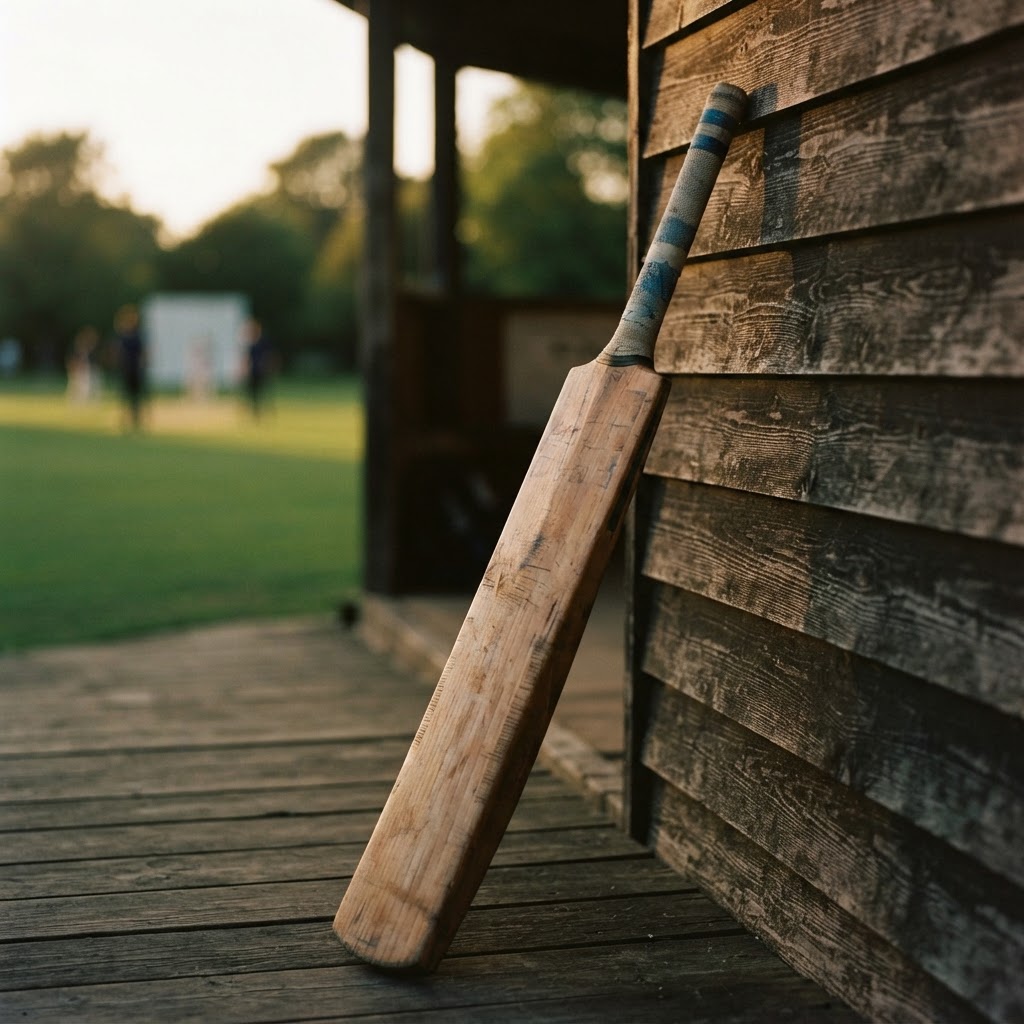
Every Cricket Shot Explained: The Complete Guide to the Batsman's Arsenal
From the textbook cover drive to the ramp over fine leg, cricket's library of batting strokes is one of the most expressive in all of sport. Here's a deep dive into every shot in the game — what they are, where they come from, and why some of them are genuinely works of art.
There is a moment, just before a cricket ball is bowled, where every possibility exists. The batsman stands at the crease, weight balanced, eyes locked on the bowler's hand. And in the split second that follows, a decision is made — one that draws on muscle memory, instinct, technique, and occasionally, pure bloody nerve. The result could be a thing of beauty or a complete disaster. Usually it's somewhere in between.
Cricket has more named shots than arguably any other bat-and-ball sport. Some are classical, taught in coaching manuals and praised by purists. Others are modern inventions, born out of the chaos of Twenty20 and the relentless pressure to score quickly. And a few exist in a strange middle ground — nominally acceptable but somehow always feeling a little reckless.
This is the complete guide to cricket shots. Not a coaching manual — there are plenty of those. This is more of a love letter to batting, to the range and variety of strokes that make watching a great innings feel like watching something genuinely artistic.
The Drives: Classical Cricket at Its Finest
If you want to understand why people fall in love with batting, start with the drives. These are the shots that get mentioned in obituaries. The ones that make opposition fans applaud despite themselves.
The cover drive is the jewel of the collection. Played off the front foot to a ball pitched on or outside off stump, the batter drives through the covers with a full swing of the bat. When it's timed perfectly — and timing is everything — it makes almost no sound at all. Just the faintest click, and the ball is racing to the boundary. Sachin Tendulkar's cover drive made grown adults emotional. Ricky Ponting's was brutal and domineering. David Gower's looked like he was barely trying. All equally devastating.
The straight drive and on drive are variations on the same theme — driving through the line of the ball, back past the bowler or into the on side. The off drive clips slightly to the off side. The lofted drive — same shape, but the batter gets underneath the ball and sends it over the infield — requires a particular kind of confidence. Get it wrong and you're caught at mid-off. Get it right and it's six.
What unites all the drives is that sense of meeting the ball full on, not deflecting or guiding it, but hitting it. There's an assertion to a good drive that's deeply satisfying, even as a spectator.
The Cuts and Pulls: Playing the Short Ball
Not every ball is there to be driven. The short-pitched delivery — rearing up into the body or climbing towards the head — demands a completely different response. This is where the cuts and pulls come in.
The cut shot is played off the back foot to a short, wide delivery outside off stump. The batter rocks back, gets into position, and slaps the ball into the off side, typically through the point region. A well-timed cut is one of the most satisfying shots to play — and one of the most satisfying to watch. There's something viscerally pleasing about a batter refusing to let a wide delivery go unpunished.
The pull shot is the answer to the short ball directed at the body. The batter swivels on the back foot, gets into line with the ball, and whips it through mid-wicket or square leg. Done properly, it's the most athletic-looking shot in cricket. Done poorly, it ends careers — or at least innings.
The hook shot is the pull's more aggressive cousin. Played to the very short, very quick delivery aimed at the head, the hook requires both bravery and excellent technique. You're essentially swinging at a ball that is trying to hit you in the face. No wonder it goes wrong sometimes. But when a batter hooks a 90mph bouncer for six over fine leg, it's one of cricket's great primal moments.
The sweep deserves its own mention here — a front-foot shot to spin bowling, where the batter kneels into the delivery and sweeps it across the line through the leg side. The reverse sweep — played in the opposite direction — is its cheeky, technically-demanding sibling. Both remain contentious. Some coaches hate the sweep instinctively. The data, broadly, does not agree with them.
The Glances, Deflections, and the Art of the Touch
Not every great shot is about power. Some of the most elegant strokes in batting are about redirection — using the bowler's pace, angling the bat face, and guiding the ball into gaps. These shots require a kind of intelligence that brute force can't replace.
The glance or leg glance is a delicate deflection through the on side, typically played to a ball that's been angled into the pads. The batter barely moves, just turns the wrists slightly, and the ball rolls away fine of square. It looks easy when done well. It is absolutely not easy.
The late cut is similar in feel — played very late, deflecting the ball down towards third man rather than cutting it powerfully. It requires superb timing and hand-eye coordination. Kumar Sangakkara made this shot look like he was playing a completely different, more refined version of cricket than everyone else.
The nurdle — a wonderful word — is the art of nudging the ball into gaps through the leg side, usually off spin bowling. It's not glamorous. It's the batting equivalent of threading a needle. But runs are runs, and a batter who can nurdle effectively is worth their weight in gold in a run chase.
Modern Innovations: The Shots That Changed the Game
For much of cricket's history, the shot-making catalogue was relatively stable. Then Twenty20 happened, and suddenly batters started doing things that had previously been considered either impossible or insane.
The scoop or ramp is perhaps the defining stroke of modern white-ball cricket. The batter gets inside the line of a full delivery and flicks or scoops it over the keeper's head, often sending it over the boundary at fine leg. First popularised at international level by Sri Lanka's Tillakaratne Dilshan — whose version became known as the Dilscoop — it has now become a standard weapon in any white-ball batter's arsenal. The first time most people saw it, the instinct was: that shouldn't work. It absolutely works.
The switch hit is arguably more technically extraordinary. The batter changes their stance and hand position mid-delivery — effectively switching from right-handed to left-handed — and plays a powerful shot on what was previously the off side. Kevin Pietersen made it famous. Umpires had extended discussions about whether it was even legal. It is. Just about. And it remains one of the most audacious things a batter can do.
The reverse ramp, the upper cut over third man, the slog sweep hoisted over mid-wicket — all of these are products of the T20 era, born out of the need to score at 10 runs per over and the realisation that convention only gets you so far when the fielding restrictions come off.
Opinion on these shots tends to split along generational lines. Older fans sometimes see them as a corruption of batting's classical tradition. Younger fans see them as evolution. The truth is probably that they're both — and that cricket is big enough to hold the cover drive and the Dilscoop simultaneously without the whole thing falling apart.
The Defensive Shots: The Ones That Don't Get Enough Credit
In an era obsessed with six-hitting and strike rates, the art of defensive batting has been somewhat devalued. This is a shame, because a well-played defensive shot is genuinely beautiful in its own way — and arguably more technically demanding than many attacking strokes.
The forward defensive — played off the front foot with a dead bat, presenting the full face to the ball and killing its momentum — is the foundation of everything else. It is the shot that buys time, preserves wickets, and denies bowlers the psychological win of troubling a batter. Watching a great forward defensive at a crucial moment in a Test match is watching someone exercise extraordinary self-control.
The backward defensive does the same job off the back foot. Less common, more instinctive, often deployed against sharp-rising deliveries that demand the batter play but offer no realistic attacking option.
The dead bat — a specific technique of angling the bat face slightly downward to take all the pace off the ball, directing it harmlessly into the ground — is something we feel strongly about here. It takes skill, composure, and a deep understanding of pace and angle. The fact that it results in zero runs is entirely beside the point. The dead bat is the batting equivalent of a controlled burn — deliberately, intentionally doing nothing, and doing it well.
Reading the Game Through Its Shots
There is a broader point lurking underneath all of this. The reason cricket's shot-making vocabulary matters — the reason it's worth sitting down and really learning what a nurdle is, or understanding the difference between a cut and a pull — is that it changes how you watch the game.
Once you understand the technical demands of a cover drive, you can appreciate why certain batters play it and others don't. Once you know what the switch hit requires in terms of preparation and nerve, Pietersen's career makes more sense. Once you've seen what a truly great late cut looks like, you understand why some innings linger in the memory long after the scorecard has been forgotten.
Cricket is a game of details. Its shots are its vocabulary — the language through which batters express their character, their courage, and their skill. Learning to read that language doesn't make you a cricket expert. It just makes you a better cricket watcher. And watching cricket, properly, attentively, with full appreciation of what's actually happening out there — that's one of the great pleasures of the sport.
Every shot tells a story. The question is whether you're paying close enough attention to hear it.