
The Evolution Of Cricket Caps: From Gentleman's Accessory To Cultural Icon
The cricket cap is one of sport's most recognisable pieces of headwear, but its journey from Victorian gentleman's accessory to cultural symbol is more fascinating than most fans realise. We trace the history, meaning, and enduring romance of the cap that sits at the heart of the game.
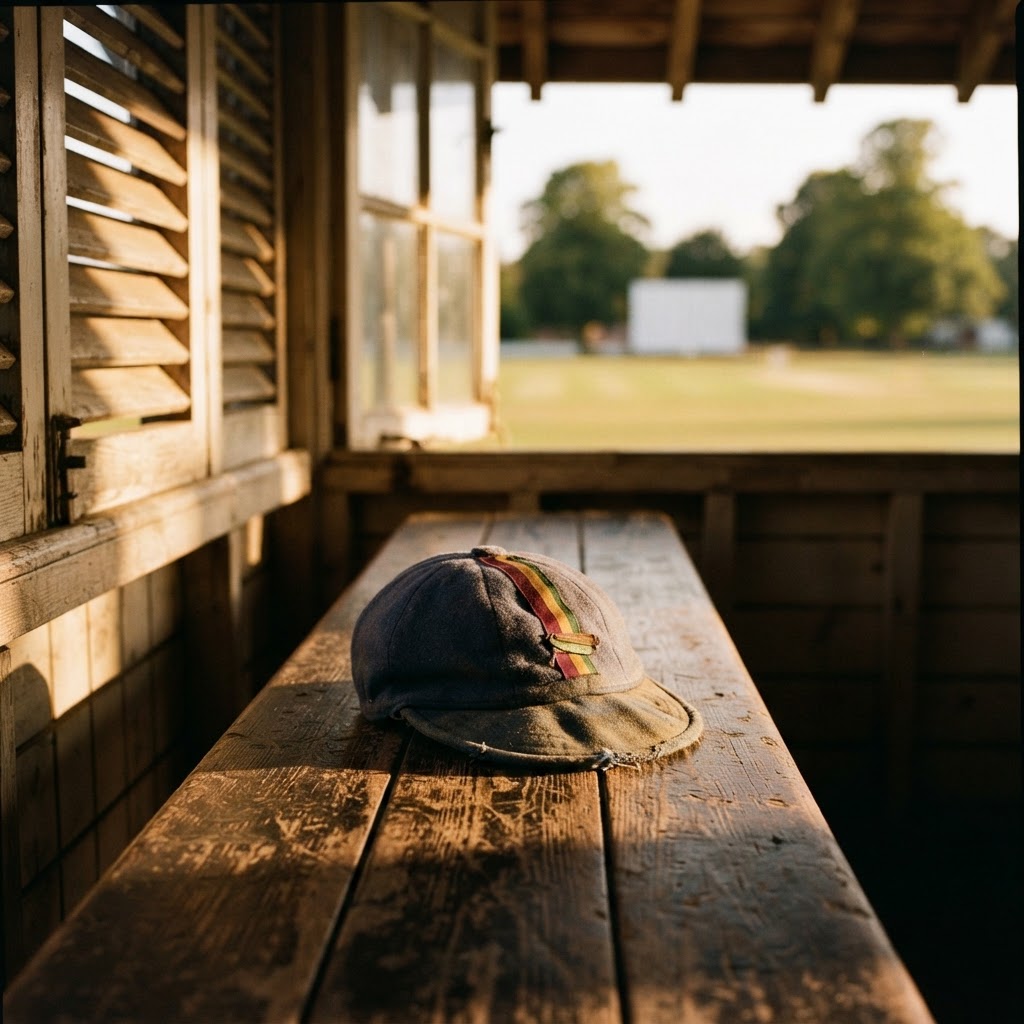
There is a moment in every cricketer's career — whether you play for England or a club side in the third division of a county league — when someone hands you a cap. It might be a pristine baggy green or a slightly moth-eaten club cap dug out from the back of the pavilion. It doesn't matter. The weight of it, the colour of it, the fact that someone thought you'd earned the right to wear it — that means something. Always has.
The cricket cap is one of those objects that carries meaning far beyond its function. Unlike a helmet, it doesn't protect you. Unlike a glove, it doesn't help you grip anything. It simply sits on your head and announces something about who you are, who you play for, and what you've been through to get here. That's a remarkable thing for a piece of cloth with a peak.
So where did it come from? How did a Victorian gentleman's accessory become one of sport's most loaded symbols? The story is longer and stranger than you might think.
The Very Beginning: Cricket Before Caps
Before there were caps, there were hats. Wide-brimmed ones, mostly, of the sort that a man farming in the English countryside in the eighteenth century might have worn to keep the sun off. Early cricket was played in such attire because early cricket was essentially played by men who had just come in from doing other things. There was no kit as we'd understand it. You wore what you had.
As cricket formalised through the late eighteenth and early nineteenth centuries — when the Marylebone Cricket Club was codifying rules and the game was spreading rapidly across England — players began dressing with more uniformity. The top hat made a brief, glorious appearance on cricket grounds. Paintings from the early 1800s show batsmen in tall hats facing down underarm deliveries, which feels like the most magnificently impractical arrangement in the history of sport. Hats flew off. Hats got knocked off. Hats were, in short, entirely unsuited to the purpose.
The shift to something more practical came around the 1850s and 1860s, as overarm bowling became legalised and the game became considerably more athletic. A flatter, closer-fitting cap made obvious sense. It stayed on your head. It had a peak that kept the sun out of your eyes. It was, by the standards of Victorian headwear, almost radical in its practicality.
Club Colours and the Birth of Identity
Here is where things get genuinely interesting. The cricket cap wasn't just adopted as practical headwear — it almost immediately became a vehicle for identity. County clubs forming in the mid-nineteenth century began producing caps in their colours. Club sides across England followed. The cap became the clearest possible visual statement of belonging.
This matters because cricket, perhaps more than any other English sport, is a game built on institutional loyalty. You don't just play cricket — you play for someone. Your club, your county, your country. The cap makes that loyalty visible and, crucially, earned. You don't buy your way into a cap. You're awarded it. That distinction, between something purchased and something conferred, is central to why the cap carries such weight.
The famous striped designs that characterise county caps — the navy and gold of Yorkshire, the dark blue of Middlesex, the brown and gold of Sussex — were established in this era and have barely changed since. There's something quietly wonderful about that continuity. A Yorkshire cap today looks essentially the same as it did a century ago. The game has changed in almost every conceivable way, but the cap endures.
The Baggy Green and the Myth-Making Power of Headwear
No discussion of cricket caps is complete without addressing the most famous one in the world: Australia's baggy green. It is, by any objective measure, not a particularly stylish piece of headwear. It's boxy. It's shapeless. It gets more shapeless the more you wear it. And yet it has become perhaps the most powerful symbol in world cricket, a piece of cloth that carries the weight of Australian sporting identity.
The baggy green is typically said to date from the 1890s, though its mythology was really cemented through the twentieth century as Australian cricketers — Don Bradman, Keith Miller, Steve Waugh in the modern era — treated it with a reverence that bordered on the sacred. Steve Waugh, particularly, elevated the cap to something close to a religious object, famously wearing his ancient, battered cap in preference to a helmet in certain situations and writing about it with genuine emotion.
What the baggy green demonstrates is that a cap's power comes not from its design but from the stories it accumulates. The Australian cap works as a symbol because generations of players have poured meaning into it, because there's a culture around it, a set of rituals and expectations. When a player is awarded their baggy green for the first time, it's a ceremony. It's understood as one of the most significant moments of a sporting life.
England's cap culture is different — the traditional England cap, a dark blue with a crown and three lions, has had a more complicated relationship with the modern game, occasionally displaced by sponsor logos and helmets — but at county level and club level, the tradition of cap presentation remains very much alive.
The Cap in County Cricket: Earning Your Colours
At county level, being awarded your county cap is a milestone that sits somewhere between a contract renewal and a knighthood in terms of what it means to the player receiving it. It's not automatic. You don't get it for signing with a county. You earn it, usually after a period of sustained performance, and the decision is made by the club.
This system — which still operates across most counties — is one of cricket's most quietly civilised traditions. It acknowledges that belonging to something fully takes time. You prove yourself first. Then you receive the symbol of belonging. Compare that to the way identity works in almost any other area of modern life, where you can brand yourself as anything you want immediately and without qualification, and the county cap system starts to look almost philosophically interesting.
For players who come from outside England, receiving a county cap carries its own particular weight. It means a club in a foreign country has decided, collectively, that you're one of theirs now. That's not nothing. That's actually rather beautiful.
Club Caps and the Grassroots Ritual
Step down from Test and county cricket into the vast, chaotic, gloriously human world of club cricket, and the cap tradition takes on yet another dimension. Most cricket clubs in England have a cap of their own — usually featuring the club colours, often embroidered with a crest or initials, almost certainly stored in a condition that would horrify a museum conservator.
At many clubs, cap presentation is still a ceremony. Some clubs present caps after a first century or a five-wicket haul. Some clubs have their own specific thresholds. Some clubs, particularly older ones, have caps that date back decades and whose original conditions of award have been lost to time. The club cap sits at the intersection of the formal and the informal, the serious and the slightly shambolic, which is where club cricket itself lives.
The culture around caps at this level is also where a lot of cricket's humour lives. Caps get stolen as pranks. Caps get worn ironically by players who've failed catastrophically in the match where they were presented. Caps get bequeathed in club speeches at end-of-season dinners. A cap is, at club level, also a prop in an ongoing comedy that has been running for about a hundred and fifty years.
Modern Cricket and the Question of What Survives
The rise of T20 cricket, and particularly franchise cricket in its various forms, has complicated the cap's role in the game. The Hundred, for instance, features teams with no historical identity to speak of — no decades of accumulated meaning, no lineage of players who wore the same colours before you. A Manchester Originals cap is a perfectly fine piece of headwear. What it cannot be, yet, is a vessel for inherited identity, because that identity hasn't had time to form.
This isn't a criticism of The Hundred specifically — all traditions have to start somewhere, and it's entirely possible that in fifty years, a Trent Rockets cap will carry genuine weight for a generation of fans who grew up watching the competition. Tradition is just enthusiasm that survived long enough.
What the proliferation of formats has done is clarify what makes the cap meaningful in its older forms. It's not the design. It's not the colour. It's the accumulation of shared stories, the rituals around its presentation, the understanding that wearing it connects you to everyone who wore it before. That's why a battered club cap in faded colours can mean more to its owner than the most expensive equipment in their bag.
Cricket survives, in part, because it keeps finding ways to attach meaning to objects and moments. The cap, simple and ancient and gloriously impractical, is perhaps the clearest example of that gift. Long may it sit, slightly askew, on the heads of players who've earned the right to wear it.