
Why Test Cricket Is The Only Format That Truly Breaks You
T20s are entertainment. ODIs are drama. But Test cricket is something else entirely — a slow, relentless examination of character that no other sport can replicate. Here's why the longest format remains the most human thing in cricket.
There is a moment in Test cricket that doesn't exist anywhere else in sport. It usually arrives somewhere around the third day, when the pitch is turning, the sun is low, and a batsman has been in for four hours without ever quite looking comfortable. He hasn't played a bad shot. He hasn't been beaten. He's just been worn down, ball by ball, decision by decision, until the weight of it all becomes too much. And then he nicks one to slip.
That moment — quiet, inevitable, almost tender in its cruelty — is what Test cricket is made of. Not the sixes, not the centuries, not the last-over finishes. The slow erosion. The patience that breaks first.
Sept ember feels like the right time to think about this. The county season is winding down, the big white-ball tournaments have had their noise, and what we're left with is red ball cricket played in low autumn light. Championship cricket. Four-day cricket. The format that demands everything and rewards almost nothing — except truth.
The Format That Invented Patience
When cricket was young, all cricket was essentially Test cricket. Long, unhurried, played across multiple days with no concept of a target being chased before a deadline. The clock wasn't the point. The contest was.
Somewhere along the way, the game decided it needed to be faster. Understandable. The world got faster too. But what we gained in pace we partially lost in depth, and Test cricket became the custodian of everything the shorter formats had to leave behind.
Patience isn't fashionable. It doesn't clip well. You can't put it in a sixty-second highlights reel. But patience is the thing that separates great Test cricketers from merely talented ones, and it's the thing that makes watching Test cricket an experience unlike anything else in the sporting calendar. You have to give it time. And it gives you something back.
The best Test matches feel less like sporting contests and more like extended conversations — with shifting momentum, long silences, sudden eruptions, and meanings that only become clear in retrospect.
Five Days Is Not Too Long. You Are Just Impatient.
The most common criticism of Test cricket from those who don't follow it closely is the length. Five days is too long, they say. Nothing happens for hours. It's boring.
This is, with respect, completely wrong.
What looks like nothing is actually everything. A maiden over in the first session of day one is a negotiation. A batsman leaving a ball outside off stump for the fourteenth time in twenty minutes is making a statement. A captain shuffling his field by six inches is a chess move. Test cricket is full of action — it's just action that requires context to understand.
There's a reason people describe watching Test cricket as meditative. It asks you to slow down with it. To stop expecting something to happen every thirty seconds and instead learn to read what is already happening. When you do, the game opens up in a way that T20 — as brilliant as it is — simply cannot.
Five days is also the only format where a team can collapse, recover, collapse again, and still win. The fluctuation of fortune across a Test match is unlike anything in sport. You can be dominant on day one and destroyed by day four. You can bowl a team out for 120 and still lose. That is extraordinary. That is not a bug. That is the whole point.
What Test Cricket Does To A Cricketer
Ask any professional who has played at all levels which format is hardest and the answer is almost always the same. Test cricket. Not because the physical demands are greater — though five days of fielding and batting and bowling across two innings is brutal — but because of what it does to the mind.
You cannot fake it for five days. You can play a cameo in a T20 and look world-class for twenty minutes. You can bat at number seven in an ODI and never face a ball in your first fifteen matches. But in Test cricket, sooner or later, the game finds you out. It finds the flaw in your technique, the weakness in your temperament, the moment where you'd rather be anywhere else. And it keeps pressing.
The players we call legends of Test cricket — those whose names survive the decades — are the ones who found a way through that. Who learned to function under prolonged pressure. Who managed five days not as a single performance but as a series of tiny battles, each one requiring fresh attention.
That is a different kind of greatness. And it is why a Test century means something that a T20 hundred simply doesn't. The context is everything. Scored in four hours, against a fresh attack, on a pitch that was doing things, under the weight of a match situation that mattered. That hundred cost something. You can see it in the way a batsman raises his bat — not just with relief, but with something that looks a lot like survival.
The Grounds That Hold The History
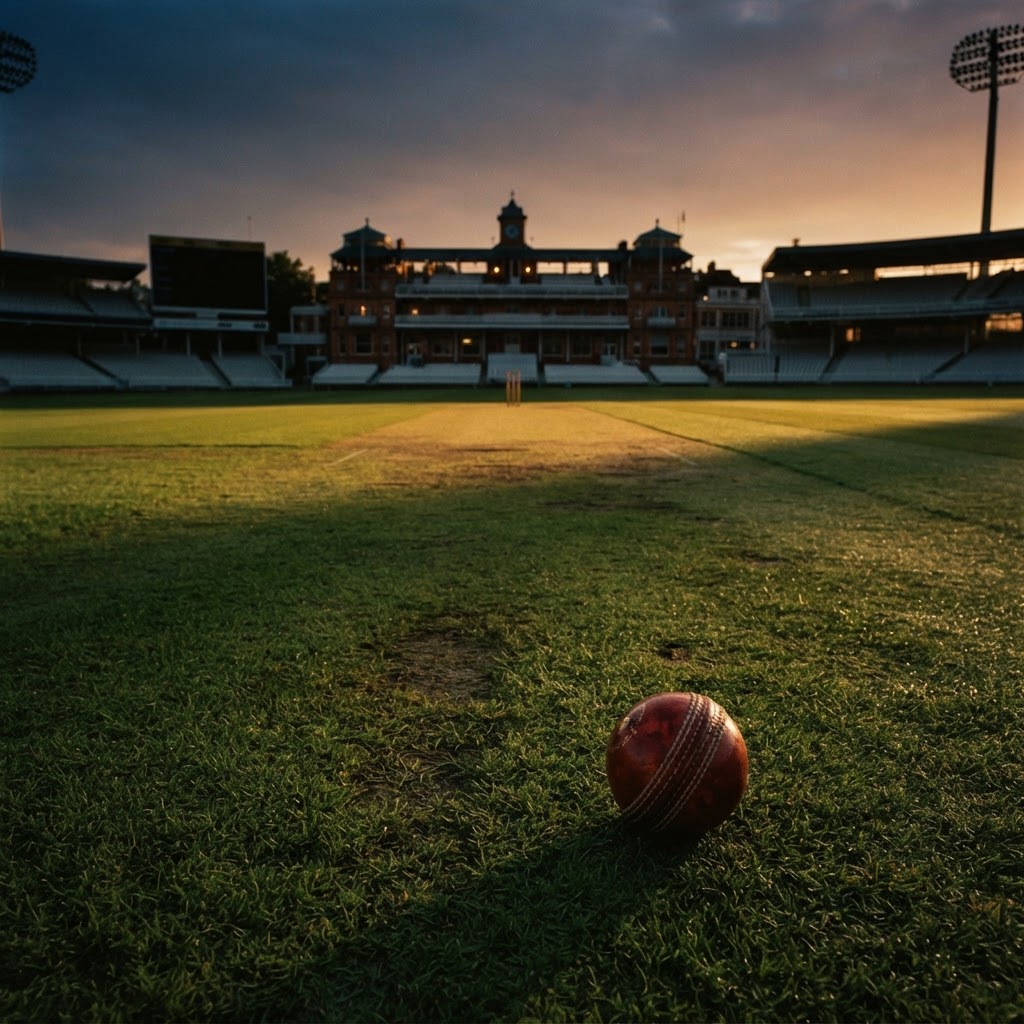
Part of what makes Test cricket feel sacred is where it is played. The great Test grounds are not just venues — they are archives. Lord's carries the weight of over two hundred years of the game. The Oval watched England and Australia play the first Test on English soil in 1880. Headingley hosted one of the most improbable victories in sporting history. Eden Gardens has held a hundred thousand people and made grown men feel small.
There is a quality to these grounds that the newer franchise venues — as impressive as they are architecturally — cannot yet replicate. It is the accumulated atmosphere of everything that has happened there. The Ashes Tests, the collapses, the last-wicket partnerships, the declarations that didn't come soon enough. It soaks into the brickwork.
When you sit in the stands at a Test match ground during a quiet session — low cloud, not many people, a spinner bowling from the pavilion end — it's difficult not to feel like you're part of something much longer than the current scorecard suggests. You're sitting where someone sat in 1953 watching the same things, feeling the same mild frustration and deep contentment. That continuity is almost impossible to value.
The Red Ball Is A Different Object Entirely
People who only watch white-ball cricket sometimes don't realise quite how different a red Dukes ball is from the white balls used in limited-overs cricket. Not just in colour. In behaviour.
The red ball swings differently. It seams differently. It deteriorates in ways that change its characteristics over the course of an innings — new ball pace and movement, softer ball in the middle session, and then the reverse swing and variable bounce of an old ball in the final overs of the day. Each phase is a different game, and a batting or bowling team has to adapt to all of them.
The Dukes ball in particular — used in England and the West Indies — is a craftsman's object. Handstitched, with a more pronounced seam than the Kookaburra used in Australia and South Africa. It rewards skill. An English seam bowler who has spent years learning to hold and move a Dukes ball in English conditions is operating with a kind of expertise that doesn't fully translate to other formats. It is specific knowledge, passed down through county cricket, honed over long careers.
There is something deeply satisfying about that. The idea that a specific ball, used in specific conditions, has produced a specific art form. English swing bowling is a product of the red Dukes ball and overcast skies and green pitches. Remove any of those elements and you remove something irreplaceable.
End Of Season, Start Of Understanding
As the county season draws to a close and the Championship race settles into its final weeks, it feels worth sitting with the question of why we care so much. The crowds at County Championship games are modest. The coverage is thin. The players are often underpaid and underappreciated.
And yet the people who love county cricket love it with a particular intensity. Because they understand what it is. Not entertainment in the conventional sense. Not spectacle. Something quieter and stranger and more durable than that.
County cricket is where Test cricketers are made and tested and broken and remade. It is where the craft of the red-ball game is kept alive across four months every English summer. It is where cricket happens without fuss, in front of a few hundred people who know exactly what they're watching.
That's what Test cricket is, ultimately. Cricket without fuss. Cricket that trusts its own depth enough not to need noise. And in a sporting world that has become almost entirely dependent on noise, that feels like something worth defending.
The game will keep changing. New formats will arrive. Franchise cricket will grow. But Test cricket will remain the measure. The format that tells you who a cricketer really is. The five days that break you and, occasionally, show you exactly what you're made of.