The Art of Coaching Cricket: What the Best Coaches Actually Do
What makes a good cricket coach?
There's a moment every cricketer remembers. Not a hundred, not a five-for — something smaller than that. A quiet word from a coach at the right time. A piece of advice that unlocked something you'd been fighting for weeks. Or sometimes, the absence of advice — a coach who watched you struggle, trusted you to find it yourself, and said nothing until the moment was exactly right.
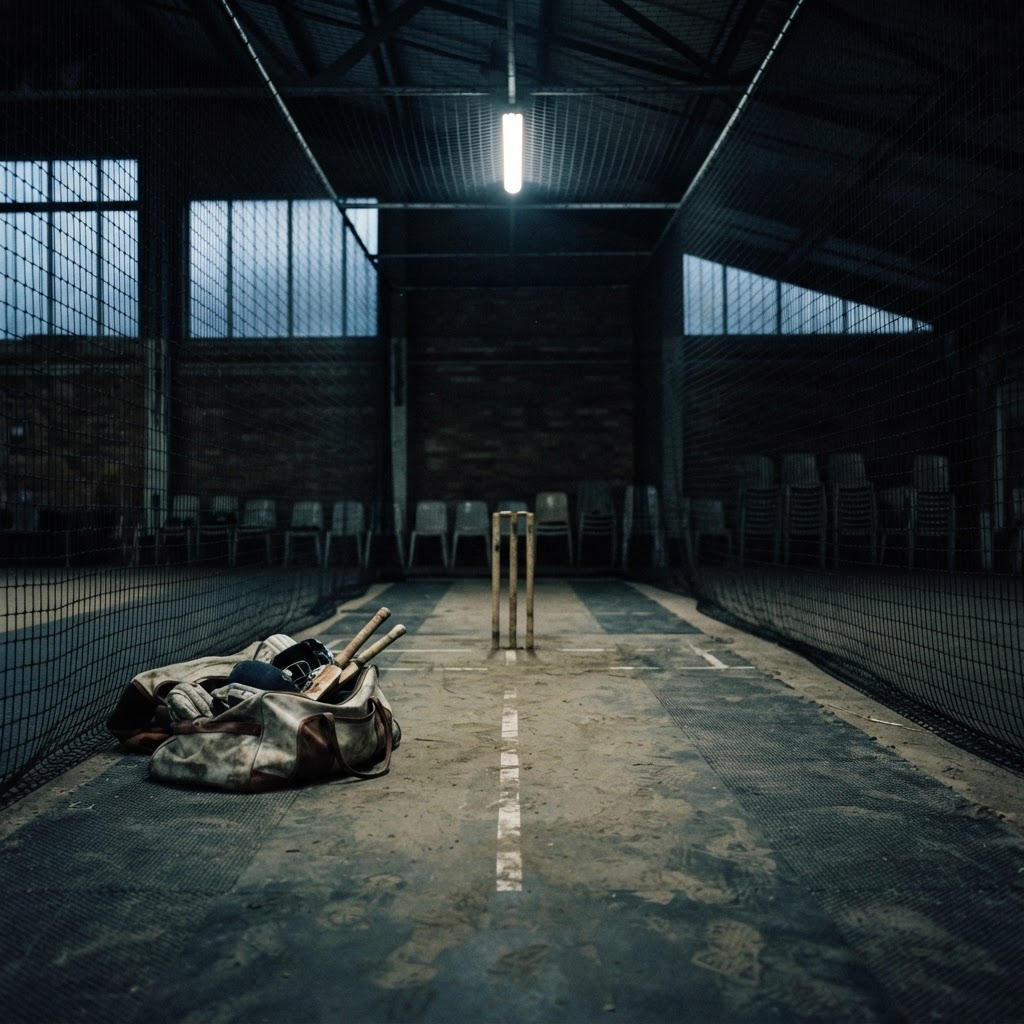
Winter nets are where coaching really happens. Not in the sunshine of a Saturday afternoon, with scorecards and spectators and the pressure of the moment. In the nets, in a cold sports hall, under fluorescent lights, with the smell of rubber matting and old kit in the air — that's where coaches do their actual work. And in November, as clubs across the country start their indoor sessions and coaches start planning for the season ahead, it feels like exactly the right moment to ask: what does genuinely good cricket coaching look like?
Because not all coaching is equal. And the difference between a coach who helps a player flourish and one who quietly does damage isn't always obvious until the harm is already done.
The Coach Who Changed Everything Was Probably Quiet
Ask most cricketers about the best coach they ever had, and there's a pattern. They rarely describe someone who talked constantly, who corrected every technical flaw in real time, who had a clipboard full of data and a whiteboard full of diagrams. The coaches that stick in the memory are usually quieter than that.
They watched more than they spoke. They asked questions rather than providing answers. They had a gift for understanding which player needed pushing and which one needed space. They knew that cricket is a game played mostly inside the head, and they coached the person as much as the technique.
This isn't romanticism. It's what the best coaches across all levels of the game — from club cricket to international — actually describe when they talk about their own development. The technical knowledge matters, obviously. But the ability to deliver that knowledge, to time the intervention, to build the kind of trust that makes a player genuinely receptive — that's the harder skill to learn, and it's the one that separates good coaches from great ones.
Technique Is A Tool, Not A Religion
Winter nets have a particular danger built into them. With time on your hands, no match pressure, and a whole off-season to fill, it's tempting to strip everything back and rebuild. And that impulse, however well-intentioned, can be quietly catastrophic.
Technique matters. Of course it does. A young batter with a massive gap between bat and pad will get found out. An opening bowler whose action puts repeated stress on their lower back is heading for injury. These things need addressing. But technique is a tool for scoring runs and taking wickets — it is not an end in itself. And the history of cricket is full of players whose coaches 'fixed' them into mediocrity.
The best coaches understand that technique exists on a spectrum, and that cricket has never produced a generation of identical players. Shivnarine Chanderpaul's stance would have failed every coaching textbook ever written. Brian Lara's backlift was towering, extravagant, everything the manuals warn against. Steve Smith looks like he's swatting wasps at a barbecue and averaged 61 in Test cricket. Technique is the foundation, not the ceiling.
What the best coaches at grassroots level understand — the ones who've been around long enough to have seen a lot of talent arrive and either flourish or quietly disappear — is that the goal isn't perfection. It's improvement. And improvement looks different for a fifteen-year-old with raw talent than it does for a thirty-five-year-old club stalwart trying to extend their career. Treating them the same way is a failure of coaching.
What Indoor Nets Are Actually For
There's a version of winter nets that happens in clubs up and down the country every year that serves almost no useful purpose. Players turn up, bowl at batters who block everything because the surface is dead, everyone goes through the motions, and nothing actually improves. The nets end. People go to the bar. Season over.
And then there's the other version — where someone has thought carefully about what the session is for. Where bowlers are working on something specific. Where batters are facing challenges that mirror match pressure as closely as a sports hall allows. Where there's intent behind every ball bowled and every shot played. Where the coach isn't just managing traffic but is actively watching, thinking, and creating situations that force players to solve problems.
The difference is almost entirely down to coaching. And specifically, it's down to whether the coach has bothered to have an actual plan.
The best indoor net sessions are built around questions. Not 'how do we get through two hours', but 'what do our batters actually struggle with, and can we design a session around that?' Can we simulate being under pressure at the end of an innings? Can we work on the specific delivery that's been dismissing our top order? Can we give our young off-spinner enough balls to actually develop their variation rather than just bowl in-and-out for twenty minutes?
Planning that kind of session takes time. It takes knowledge of the players. It takes genuine investment in what happens next May. That's what good coaches do in November.
The Club Coach Nobody Sees
Here's something that doesn't get said enough: the unsung heroes of cricket in this country are club coaches. Not the ones with international experience who get the headlines. The ones who show up on Tuesday evenings in November to run nets for fifteen players who range from genuinely talented teenagers to forty-something openers who mostly want to stay sharp and have a laugh.
These coaches hold clubs together. They're the ones who spot the quiet kid at the back who's got something, who have a word with the teenager whose confidence has collapsed mid-season, who somehow remember every player's specific technical issue and their specific emotional relationship with the game. They do it, mostly, for nothing. Or close to nothing.
This is worth saying loudly because club cricket only exists because these people exist. The game at grassroots level is not held up by television money or sponsorship deals or the ECB's latest strategic plan. It is held up by volunteers. And coaches — real coaches, the ones who care — are the most important volunteers in any cricket club.
If your club has one, appreciate them. Buy them a drink. Tell them what they did that made a difference. Those things matter more than you might think.
What Players Can Do To Help Themselves
Coaching is a relationship, and relationships require two sides. The players who get the most from a coach — at any level — are the ones who show up with intention and openness. That sounds obvious, but watch a net session sometime and count how many players are genuinely trying to improve versus how many are just batting.
The first thing any player can do is arrive with a question. Not a demand, not a complaint, not a defence of their existing technique — a genuine question. 'I keep getting trapped LBW through the gate against swing bowlers — what am I doing?' That question gives a coach something to work with. It signals that the player has been thinking about their game and is genuinely open to input. It makes the whole session more productive.
The second thing is harder: willingness to feel worse before you feel better. Technical changes feel awful before they feel natural. If a coach is working on something with you that genuinely needs to change, the first few weeks are going to feel wrong. Players who bail on a change because it feels uncomfortable are cutting themselves off from improvement. The best coaches manage this process carefully — they don't ask for wholesale overnight transformation — but the player has to be willing to stay uncomfortable for a while.
And the third thing? Trust. Not blind trust — if something genuinely doesn't feel right, say so. But a certain baseline of trust in the person who's watching you from the other end of the net. They can see things you can't. That's the whole point.
Why November Matters More Than March
There's a school of thought that says the work you do in November and December doesn't matter as much as what you do in the final weeks before the season. That spring fitness, spring nets, spring rhythm is what actually sets you up for May.
This is wrong. Or at least, it's only half right.
What you do in November is the work nobody sees. It's the foundation. It's where you actually make changes — not apply finishing touches, but make real, lasting changes to your game. Because the further you are from match pressure, the more freedom you have to dismantle and rebuild. By March, the anxiety of the season approaching makes real change psychologically very difficult. Players revert. The comfortable becomes irresistible.
November is the time to be uncomfortable. To overhaul the thing that's been costing you wickets for three seasons. To ask the coach the question you've been slightly embarrassed to ask. To bowl something you're not sure about and see what happens. To genuinely experiment.
The players who arrive in April quietly improved — not just sharper, but actually better — are almost always the ones who took November seriously. Who showed up to the cold sports hall, under the fluorescent lights, and did real work.
That's what winter nets are for. Not just keeping the rust off. Becoming a different player than the one who walked off the pitch in September. And having a coach beside you who understands the difference — who sees what you're trying to become, not just what you currently are — makes all the difference in the world.
If you're someone who takes the quiet work seriously — the November nets, the early mornings, the craft behind the game — the Deadbat hoodie range was made for exactly that mindset. Warm enough for the walk from the car park to the sports hall, and built for people who actually love cricket rather than just play it. EXPLORE THE COLLECTION →