Why Every Cricketer Loves A New Ball
Why is the new ball important in cricket?
The Most Anticipated Moment In Any Innings
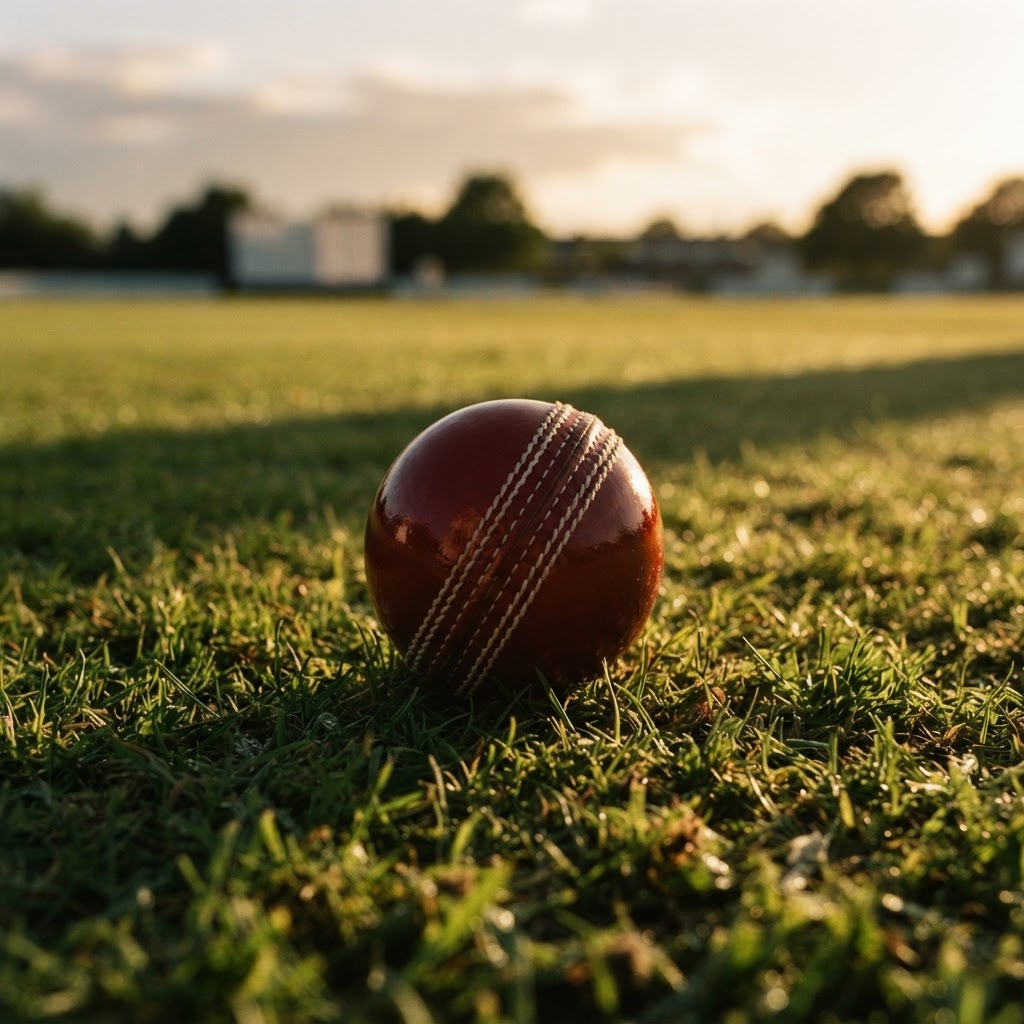
Before a single delivery is bowled, before the openers have faced a single ball, there is a moment that every cricketer — from Test arena to village green — recognises instinctively. The umpire reaches into his coat pocket, or unclips a small pouch from his belt, and produces it. Bright red. Perfectly round. Seam raised like a ridge on a map. The new ball.
It gets handed to the captain, who holds it for a moment — sometimes longer than necessary — before passing it to the opening bowler. That bowler inspects it, turns it over in their hands, runs a thumb along the seam. There is ceremony in this. There is ritual. And in that moment, something shifts on the field. The fielders stand a little taller. The batsmen at the crease narrow their eyes. Everyone knows what is coming.
The new ball is not just a piece of equipment. It is a symbol of possibility, of threat, of the game resetting itself and offering bowlers their best chance. Understanding what a new ball means — and why cricketers of all levels feel something primal when it appears — gets to the heart of what makes cricket unlike any other sport.
What Makes A New Ball Different
To someone who has never played cricket, the idea that a ball's age matters might seem strange. In most sports, equipment is equipment. But cricket is not most sports.
A brand new cricket ball — whether a Dukes, a Kookaburra, or an SG — behaves differently to a ball that has been in play for forty overs. When new, the lacquer coating is intact and the seam is proud. This combination allows the ball to swing through the air in ways that defy simple physics. Bowlers who understand how to hold it, how to angle the seam, how to use wrist position and release — they can make a new ball talk.
The Dukes ball, used in English and West Indian conditions, is particularly revered for its pronounced seam and its ability to swing late. There is something almost mystical about a Dukes ball in overcast English conditions in the hands of a proper seam bowler. The ball moves in the air, then off the pitch. Batsmen who have faced nothing but flat-track deliveries for years suddenly find themselves guessing at angles they have never had to consider before.
The new ball is fast, too. The lacquer keeps the ball hard and dense. It comes onto the bat differently. Edge it onto your pad and you feel it. Edge it to slip and it carries. The old ball, by contrast, is soft and tired — it can reverse swing if it is maintained correctly, but that is a different kind of magic. The new ball is loud and immediate. It announces itself.
The Bowler's Truth
Ask any opening bowler — village club or international — what their favourite moment in cricket is, and the answer will almost always involve a new ball. This is their time. The conditions favour them. The pitch is at its freshest. The batsmen are yet to settle. And the ball is doing everything it is capable of doing.
There is a particular kind of fast bowler who has lived their entire career for this. They are not necessarily the quickest or the most gifted. But they know how to use a new ball. They know the science of seam position, the art of holding the shiny side against the breeze, the discipline of hitting the same length delivery after delivery until something gives. They are craftsmen, and the new ball is their best tool.
At club level, this relationship is even more pronounced. Club cricketers spend most of their bowling lives with a knackered old ball that goes soft after ten overs and refuses to do anything remotely interesting. The new ball — which many clubs only have for the opening exchanges before it gets scuffed and softened — feels almost unfair in the best possible way. For those brief, opening overs, the seam bowler is in their element. Swing, seam, pace off the pitch. It is why so many club cricketers who bowl first change spend their evenings dreaming of being given the new ball one day.
For spinners, of course, the new ball is largely irrelevant. They wait. Patiently. Until the ball is old and rough and the shine has gone. But even they understand the theatre of the new ball. Even they appreciate what it means to a fast bowler standing at the top of their mark, ball in hand, seam upright, ready to run in.
The Batsman's Calculation
If the new ball is a bowler's dream, it is a batsman's examination. Facing the new ball — particularly in red-ball cricket — is one of the game's great tests of temperament. The ball swings. It seams. It comes onto the bat quickly. And you are, in the first few overs, at your most vulnerable. Your eyes are not in. The bowler is fresh. The fielders are alert and hungry.
This is why openers occupy a special place in cricket's culture. They are not necessarily the best batsmen in the side. But they are the ones willing to walk out and face the new ball, absorb its threats, and blunt its edge for the middle order who will follow. The great opening partnerships in cricket history — Hobbs and Sutcliffe, Greenidge and Haynes, Langer and Hayden — were built on this understanding. Two batsmen, together, making the new ball old.
There is a particular kind of bravery involved in opening the batting. It is not the bravery of pulling a short ball or launching a spinner over long-on. It is quieter than that. It is the bravery of knowing that the game, in these opening overs, is tilted against you — and going out anyway. Trusting your technique, trusting your partner, trusting that if you can just see off the new ball, something shifts in your favour.
And when it does shift — when the ball gets old and the swing disappears and the pitch flattens out — you feel it. The game changes. The bowlers grow quieter. The field spreads. And the opener who has survived the new ball is suddenly free.
The Eighty-Over New Ball: A Tactical Chess Match
In Test cricket and most first-class formats, the fielding side can take a second new ball after eighty overs. This rule alone has produced some of the most tactically fascinating passages of play in cricket history.
The second new ball is a gamble and a weapon. If your bowlers are tired, it might be less effective than the reverse-swinging old ball that has been maintained beautifully for sixty overs. If the batting side has a set partnership and momentum, taking the second new ball can disrupt them — or it can give them free boundaries as the harder ball flies off the edge for four through vacant slip.
At Test level, captains think about the second new ball obsessively. Do you take it the moment it becomes available? Do you wait? Do you use it to end a session or start one? These decisions, unnoticed by many casual viewers, are part of what makes Test cricket's tactical depth so endlessly absorbing.
At club and recreational level, there is no second new ball. There is only the one, and it must last the entire innings. This means the maintenance of the ball — one side shined obsessively by the fielding side, the other left rough — becomes a team ritual in itself. Players who understand how to shine a ball properly are valued. The captain who knows when to bowl their reverse swing specialist is respected.
What The New Ball Tells Us About Cricket
Cricket is a game of phases. It ebbs and flows in ways that football or rugby simply do not. A session can shift in a single over. A game that looks dead can come alive. And the new ball — both the first one and the second — is one of the great reset buttons in sport.
This is part of what makes cricket so addictive for those who truly understand it. You can watch a flat, boring session of play and then, suddenly, the second new ball is taken, the swing returns, and three wickets fall in four overs. The game has transformed. The scoreboard has not changed that dramatically, but everything feels different. The energy on the field is different. The crowd — if there is one — is suddenly leaning forward.
The new ball is also a reminder that cricket is a game of honesty between bat and ball. It is not always meant to be easy. The pitch is not meant to always be flat. The conditions are not meant to always favour the batsman. Cricket at its best is a contest, and the new ball — shiny, hard, full of movement and menace — is the instrument through which that contest is most sharply defined.
There is beauty in a cover drive off the front foot. There is beauty in a perfectly executed pull shot. But there is also beauty in a delivery that swings late, beats the outside edge, and rattles the top of off stump. A new ball, a great bowler, an overcast morning — these are the ingredients of some of cricket's most unforgettable moments. And that is why, whenever one is produced from a pocket or a bag or an umpire's coat, the whole ground holds its breath.
If you love the craft side of cricket — the seam, the swing, the chess match between bat and ball — our tees were made for fans who watch the game properly. Browse the Deadbat collection and find something that feels like cricket. EXPLORE THE COLLECTION →