The Art Of The Cricket Tour: Why Every Club Side Should Make The Journey
Why do cricket clubs go on tour and what makes a cricket tour special?
There is a moment on every cricket tour — usually somewhere between the second evening and the third morning — when the whole thing stops feeling like a holiday and starts feeling like something else entirely. The formalities drop. The guard comes down. You start to understand why people who have toured together speak about it for the rest of their lives.
Club cricket tours are one of the sport's great unsung traditions. Not the professional kind, where squads travel in business class and stay in five-star hotels with security cordons and media schedules. We are talking about the grassroots kind. The minibus kind. The kind where someone always forgets their boots and someone else always brings far too much equipment and the accommodation is described as "basic but characterful" by the organiser, which usually means there is one shared shower and a landlord who expects you to be up by eight.
And yet. Ask anyone who has been on a proper club cricket tour and they will tell you it was one of the best experiences of their cricketing life. There is a reason the tradition has survived for well over a century. There is a reason it endures.
Where The Tradition Comes From
The cricket tour is almost as old as organised cricket itself. The first major touring sides left England's shores in the mid-nineteenth century — amateur gentlemen cricketers travelling to North America, Australia, and the Caribbean, carrying the game with them and discovering, often to their surprise, that the game had already arrived before them.
But the touring tradition was never just for the elite. Village sides and club elevens were going on tour long before the concept had a name. Short trips to a neighbouring county. A few days in Wales or Scotland. A fixture arranged by letter with a ground somewhere that sounded pleasant and worth the journey. It was a way of playing cricket in new environments, meeting new opponents, and reminding yourself that the game existed far beyond your own postcode.
By the twentieth century, the club tour had taken on its own rituals and codes. There were tour committees. Tour rules — often elaborate, occasionally ridiculous. Tour shirts, distinct from match whites, worn with a kind of informal pride. There were fines meetings in the evenings where the day's indiscretions were judged and punished in beer. There were speeches, traditions passed down from senior players to younger ones, and a clear understanding that what happened on tour was not quite the same as what happened at home.
This was not escapism. It was community. It was cricket doing what cricket has always done best — creating a structure within which human beings can properly get to know each other.
The Places That Make Tours Worth It
Part of what makes a great cricket tour is the destination itself. Not every ground is equal, and seasoned tourers develop strong opinions about where you should and should not go.
The West Country is perennially popular among English club sides for good reason. Grounds in Devon and Cornwall have a particular quality to them — often set against backdrops so dramatically beautiful they make concentration genuinely difficult. Playing cricket on a ground where the sea is visible beyond the boundary rope is one of those experiences that sounds implausible until you have done it, and then stays with you permanently.
Scotland offers a different kind of touring experience — cooler, sharper, more likely to be interrupted by weather that arrives without warning from directions you hadn't considered. But the hospitality at Scottish cricket clubs is exceptional, the grounds often hidden in landscapes of genuine grandeur, and the opposition competitive in a way that keeps you honest.
Ireland has become an increasingly popular destination as Irish cricket has grown. The grounds around Dublin, Cork, and the north offer proper competitive fixtures, outstanding post-match hospitality, and a cricketing culture that is fiercely proud and warmly welcoming at the same time.
For touring abroad, the Netherlands, Germany, and the Channel Islands all offer well-organised fixtures for club sides willing to travel. And for the more ambitious touring party, the Caribbean remains the dream destination — a place where cricket is not just a sport but something woven into the texture of everyday life.
What A Tour Actually Tests
The romantic version of the cricket tour focuses on the scenery and the camaraderie. The honest version acknowledges that tours also test things that three hours on a Saturday afternoon simply cannot.
They test character. When you are tired from the previous day's travel and the pitch is doing something unexpected and the opposition is better than the fixture list suggested, you find out a lot about yourself as a cricketer. The performances that mean the most are rarely the ones in league matches at your home ground. They are the ones on unfamiliar surfaces, in front of strangers, when you are slightly outside your comfort zone.
They test relationships. Spending three or four days in close proximity with your club mates removes the usual social scaffolding. You see people in conditions that reveal more than a post-match drink ever could. Long friendships are often cemented on tours. So, occasionally, are long-running grievances — though the good ones are usually resolved by the end of the trip.
They test your cricket IQ. Playing opposition you have never faced before, on grounds you do not know, forces you to adapt. The batsman who is dominant on his home track has to find a different kind of game. The captain who knows every blade of grass at their usual ground has to read a new pitch from scratch. This is where cricketers grow.
The Rituals That Make A Tour A Tour
Every serious touring side accumulates rituals over the years. These are not optional extras. They are the architecture of the tour itself.
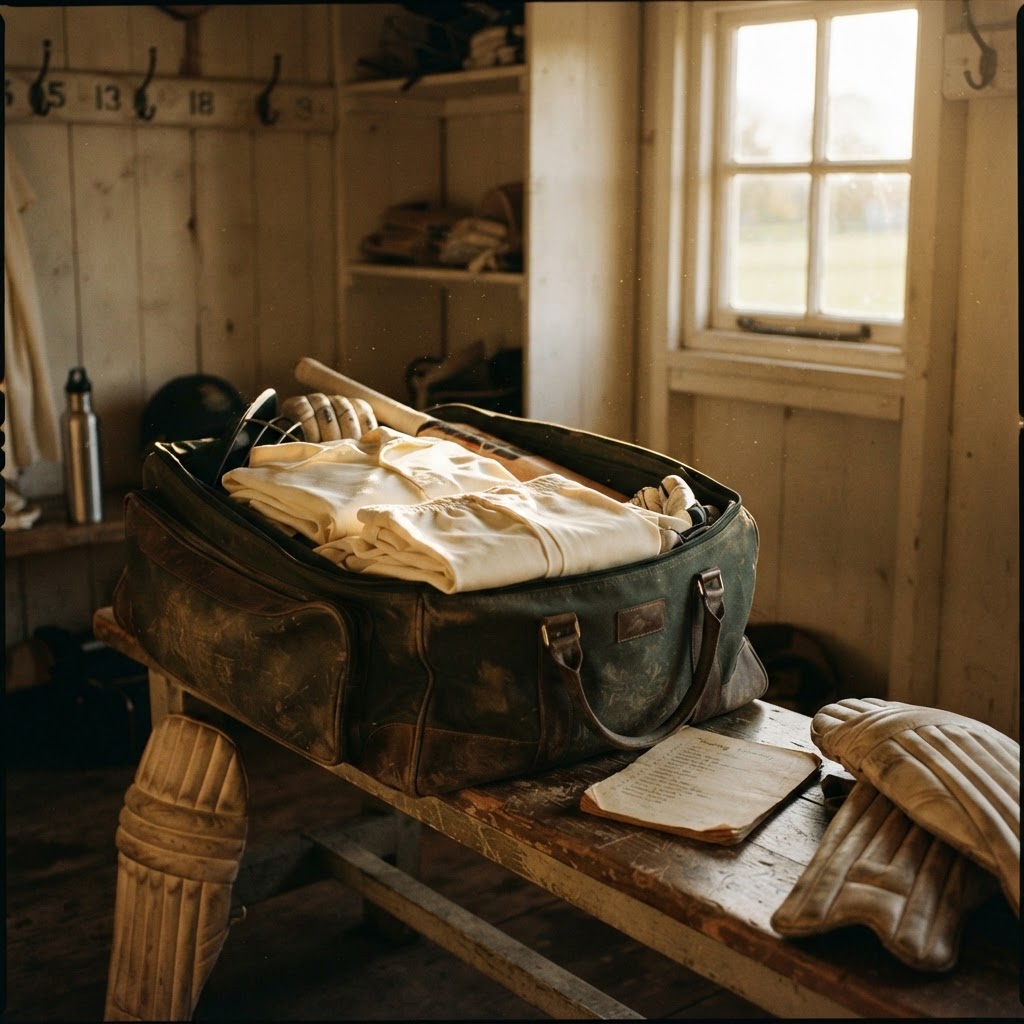
The pre-tour meeting, where logistics are finalised and someone is appointed tour manager against their will. The loading of the minibus, which always takes longer than it should and always involves at least one piece of kit being forgotten until you are twenty minutes down the motorway. The first fixture, which sets the tone for everything that follows — a close win is ideal, a heavy defeat is character-building, a washout is a minor tragedy.
The fines meeting is perhaps the most important ritual of all. It is a kangaroo court and everyone knows it. The charges are invented, the evidence is circumstantial, and the punishments are petty. But it is the mechanism through which the group processes its shared experience, and the laughter it generates is the kind that bonds people properly.
The final evening, when the trip is almost over, has a particular quality to it. There is nostalgia for something that has not yet ended. There are speeches that are better than they have any right to be. There are toasts to next year, which everyone means sincerely in the moment.
And then the drive home. The minibus quieter now. Everyone tired. Someone asleep before you have left the car park. The ground receding in the mirror. The shared understanding, unspoken, that what just happened was worth every bit of the organisation, the expense, and the logistical chaos.
Why More Clubs Should Go On Tour
There is a version of this argument that is purely practical. Touring strengthens squad cohesion. It develops younger players. It creates a shared identity that carries through the domestic season. All of this is true.
But the deeper reason is simpler. Cricket is not just a game you play. It is a game you inhabit. You accumulate it over years — grounds you have played on, opponents you have faced, moments that lodge in your memory for reasons that have nothing to do with the scorecard. The tour accelerates all of this. It gives you six months' worth of cricket experience in four days.
The clubs that tour regularly tend to be the ones with the strongest cultures. Not always the most successful in terms of league position, but the ones with the best changing rooms, the best post-match atmospheres, the youngest players who are most eager to be involved. Touring creates belonging. And belonging is what keeps people playing cricket into their thirties and forties when every other sport has let them go.
October is the month when the fixtures have ended but the cricket does not have to. This is when the tour plans get made. Fixtures get arranged. The group chat lights up with suggestions that range from sensible to wildly optimistic. Someone produces a spreadsheet. Someone else ignores the spreadsheet entirely and books something independently, which causes a minor diplomatic incident.
It is all part of it. The tour begins long before you leave home. And for those who have experienced it properly, it never really ends.
If the touring mentality — that sense of representing something, going somewhere, carrying the game with you — resonates, our hoodies were made with exactly that spirit in mind. Something you'd wear on the minibus, at the ground, and at the bar after. Built for the journey. EXPLORE THE COLLECTION →