Why Club Cricket Is The Heart Of The Sport
Why is club cricket important to the sport?
There is a particular kind of Saturday in late summer — overcast, slightly cool, the outfield damp from the morning rain but the square holding firm — that exists almost exclusively in the world of club cricket. The opposition are 180 for 6 chasing 210. Your opening bowler has done his ten overs and is now eating a sausage roll at mid-on. Your captain is rotating options through an attack that includes a left-arm seamer who hasn't bowled since July and a spinner who once took five wickets but hasn't come close since. And somehow, despite all of this, everyone on the field is completely, unshakeably invested.
This is club cricket. Imperfect, occasionally chaotic, deeply human. And it is, without question, the heart of the sport.
When people talk about saving cricket, growing cricket, or protecting cricket's future, the conversation almost always drifts toward Test matches, broadcast deals, and franchise T20 leagues. These things matter. But they are the visible tip of something enormous and quietly magnificent that happens every weekend across thousands of grounds in England and around the world. Club cricket isn't the foundation of the game. It is the game. Everything else is just what happens when you scale it up.
Where Cricketers Are Actually Made
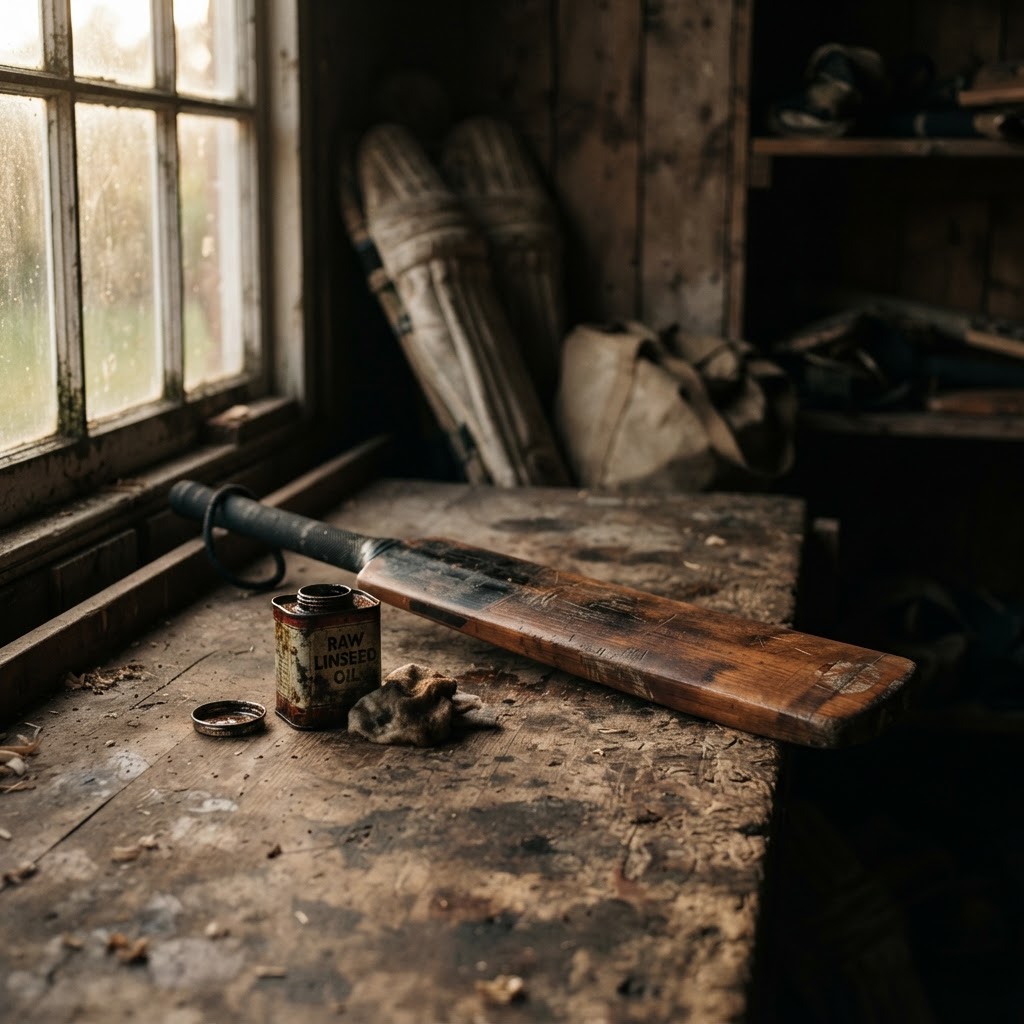
The mythology around great cricketers tends to focus on academies, county second XIs, and international breakthroughs. But trace almost any cricketer's story back far enough and you arrive at a club. A slightly uneven square, a pavilion that smells of linseed oil and instant coffee, a coach who gave up his Saturday mornings for twenty years because he simply loved it.
This is where technique is forged under genuine pressure. Not the pressure of a thousand cameras, but the pressure of not wanting to let your teammates down. Of knowing the bloke who's just got you out is someone you'll be having a pint with in two hours. Of fielding at deep square leg knowing that if you drop the catch, you'll be hearing about it until Christmas.
Club cricket builds cricketers in ways that no academy drill sheet can replicate. It teaches adaptability — how to bat on a sticky dog of a pitch in April, how to bowl into the wind when you're already tired, how to keep wicket when the gloves are two sizes too big because the regular keeper had a birthday party. These are the invisible skills that separate cricketers who can perform in controlled environments from those who can perform anywhere.
The Characters You Only Find At Club Level
Every club has them. The opening bat who has been scoring thirties and forties for fifteen years and genuinely believes each one was a near-century. The medium pacer who thinks he's quicker than he is but somehow always takes a wicket at the right moment. The veteran all-rounder who fields at slip regardless of how the ball is moving and takes two blinders every season entirely by accident. The scorer who has been doing the job since 1987 and views every late tea as a personal affront.
These characters are not incidental to club cricket. They are its texture. They are what make each club distinct — not the kit, not the ground, but the accumulation of personalities and histories that give a club its particular flavour. There is a sociology to club cricket that nobody has ever quite managed to capture in a book, because it's too local, too specific, too alive to be pinned down properly.
And then there is the social architecture of it all. The quiet conversations in the changing room after a tough loss. The team WhatsApp group that oscillates between logistics and complete nonsense. The end-of-season dinner where someone gives a speech that is simultaneously terrible and one of the best things you've ever heard. This is the connective tissue of cricket culture, and it exists almost entirely at club level.
What Club Cricket Teaches You About Losing
Elite sport has an awkward relationship with defeat. At the highest level, losses are dissected, blamed, and litigated across television panels for days. But club cricket has a different relationship with losing, and it's one of the things that makes it genuinely instructive about life.
At club level, you lose often. You lose badly sometimes. You get bowled out for 67 on a cold afternoon in April and then you sit in the pavilion and eat sandwiches with the same people who just got you out. You shake hands, you have a drink, you laugh about the run out that was entirely avoidable, and you get on with it. There is no post-match press conference. There is no blame cycle. There is just the reality of sport, held lightly.
This is, frankly, a better education in resilience than anything a sports psychologist can provide. Club cricketers learn that losing doesn't define you, that the game continues regardless, and that the tea at the break tastes just as good whether you're winning or getting hammered. That perspective — the ability to hold both the seriousness of competition and the lightness of perspective at the same time — is one of cricket's greatest gifts, and it is cultivated almost entirely at club level.
The Unsung Infrastructure Of The Game
For every ground that hosts international cricket, there are ten thousand grounds that exist purely because someone mows the square every week, marks the crease on a Thursday evening, and patches the square in October so it survives the winter. This is the invisible infrastructure of cricket — the groundsmen who are not groundsmen by job title but by love, the treasurers who spend February chasing subs, the volunteers who repaint the pavilion every five years whether it needs it or not.
Club cricket runs on an economy of goodwill that has no parallel in professional sport. It is kept alive by people who get nothing from it except the thing itself — the game, the community, the ritual. This is worth saying loudly and often, because it is genuinely remarkable. In a world that increasingly measures everything by its return on investment, club cricket stubbornly refuses to calculate its worth in anything other than the hours spent and the friendships made.
The ECB and Cricket Australia and other governing bodies have, at various points, made noise about supporting grassroots cricket. Some of it has been genuine and effective. But the truth is that club cricket largely sustains itself through the commitment of ordinary people who simply refuse to let it disappear. That deserves recognition that goes well beyond a line in an annual report.
October And The Quiet That Follows
There is something particular about October in club cricket. The season is done. The square has been covered. The kit bag has been unpacked, the boots left by the back door still carrying a memory of last month's outfield. The group chat has gone quiet in a way that feels specific to this time of year — not silent, exactly, but resting.
October is when club cricketers become fans again. When they watch Test series from the sofa with the particular authority of someone who has actually stood at the crease and understood, on a physical level, what it means to face a ball that moves late. There is a connection between watching elite cricket and having played club cricket that runs deeper than most cricket writing acknowledges. Club players don't just watch; they translate. They understand the panic of an unexpected delivery, the relief of a boundary, the particular loneliness of a long defensive spell when nothing is happening.
And then, slowly, October becomes November, and November becomes February, and somewhere in that grey stretch a thought arrives: training starts soon. New season. New squad. The ground will be soft again and the nets will smell of rubber and hard work and possibility. The cycle turns, as it always does, and club cricket gets ready to do what it has always done — quietly, stubbornly, magnificently sustaining the game that everyone else is trying to save.
The Game Belongs To The Clubs
Here is an opinion worth stating plainly: Test cricket is the pinnacle, but club cricket is the point. It is why the game exists. Not as a pipeline for talent, not as a community outreach exercise, not as a vehicle for growing participation numbers in a PowerPoint deck. Club cricket exists because cricket is worth playing. Because the experience of playing the game — with all its complexity, its slowness, its sudden drama — is valuable in itself.
Every time you watch a great Test innings, you are watching someone whose earliest cricket memories involve a club ground somewhere. A slightly uneven bounce. A tea that arrived at exactly the right moment. A captain who believed in them when the form was patchy. The game is one continuous thread, and it runs through every club in every country where cricket is played.
The headlines belong to the internationals. But the heart of the game? That beats loudest on a Saturday afternoon, on a ground you've never heard of, in a match that no one is recording, with twenty-two people who would rather be nowhere else in the world.
If club cricket and everything it stands for resonates with you — the culture, the commitment, the love of the game for its own sake — our range of cricket-inspired tees was made with exactly that kind of cricket fan in mind. Worn on the terraces, in the pavilion, or anywhere else you carry the game with you. EXPLORE THE COLLECTION →