The Village Cricket Ground: Why These Patches of Grass Are England's Greatest Treasure
What are the best village cricket grounds in England?
There is a particular kind of peace you only find at a village cricket ground. Not the manufactured calm of a spa or a yoga retreat, but something older and more honest — the quiet of a Saturday afternoon in late summer, the sound of leather on willow drifting across a ground that has probably looked exactly the same for a hundred years. If you have ever stood at the boundary rope of a village ground with a cup of tea in your hand, you already know what we mean.
England invented this game and exported it to the world. But somewhere between the Big Bash and the IPL mega-franchises, between DRS reviews and Hawk-Eye graphics, it is easy to forget that cricket's truest soul still lives on these little squares of turf, hemmed in by churchyards and cow pastures and ancient oak trees. Village cricket grounds are not a footnote in the history of the sport. They are the whole story.
This is not a ranked list and it is not a travel guide. It is an argument. An argument that these grounds — overlooked, underfunded, and frequently muddy — are where cricket actually lives.
What Makes a Village Ground Different From Everywhere Else
The gap between a village ground and a Test match venue is not just a matter of scale. It is a matter of feel. Lord's is magnificent, obviously. Headingley has a particular electricity on a packed Ashes morning. The Oval in September light is one of sport's genuinely beautiful sights. But none of them give you what a village ground gives you.
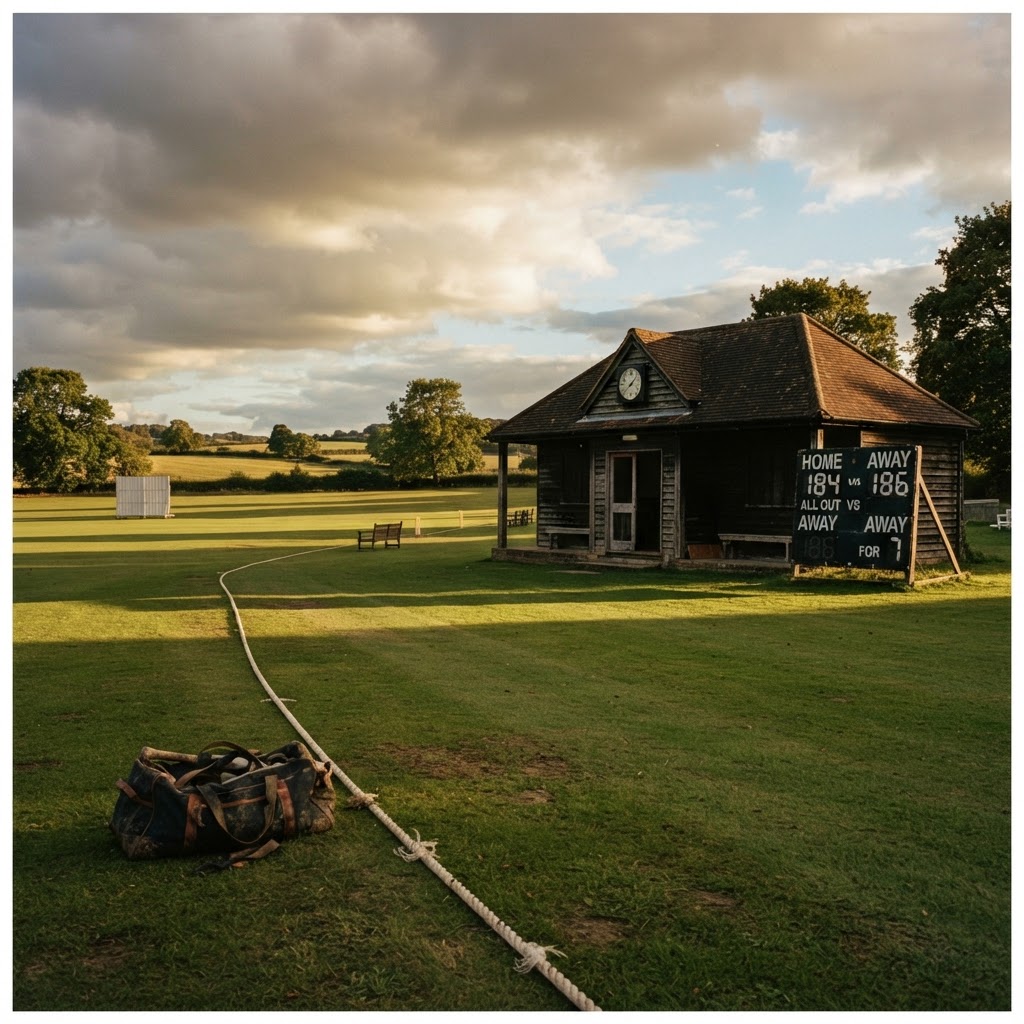
At a village ground, the boundary rope is a fraying piece of string held up by rusting metal stakes. The scoreboard is operated by a volunteer who occasionally loses count. The outfield runs slightly downhill toward the stream at the third man boundary, which everyone knows about and no visiting team is warned about. The square has a rogue bare patch on a length outside off stump that has existed since roughly 1987 and shows no signs of going anywhere.
These imperfections are not flaws. They are the character of the place. They are proof that this ground has been played on, loved, argued over, and maintained by people who care deeply about something that offers them very little in return except the joy of doing it. There is something almost sacred about that.
The Grounds That Stay With You
Ask any cricketer who has played the village game for long enough and they will have a list. Not a list of the biggest grounds they have played at, but the ones that have stuck in the memory for reasons that are hard to fully explain.
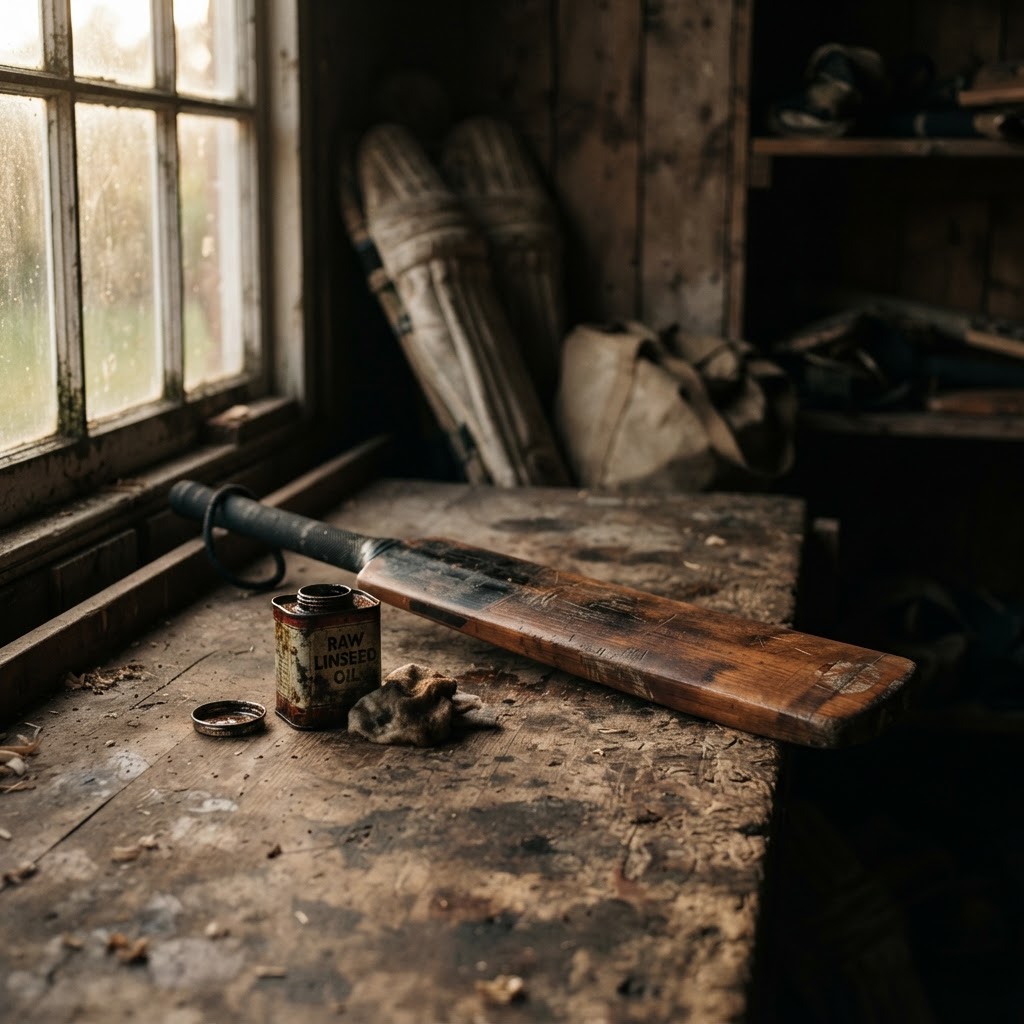
Grounds perched on hillsides in the Yorkshire Dales, where the wind comes off the moors and makes swing bowling nearly impossible to predict. Grounds in the Cotswolds where the pavilion is a converted barn and the home team's kit lives in a wooden chest that smells of linseed oil and old cricket whites. Grounds in Kent and Sussex where you can see the English Channel on a clear day, which sounds like a distraction but actually makes the whole experience feel like a painting you are somehow inside.
In Cornwall, there are grounds surrounded by hedgerows so dense they feel more like a room than an open space. In the Lake District, grounds where the backdrop is so distractingly beautiful that concentration becomes genuinely difficult. In Shropshire and Herefordshire, grounds that sit in valleys so quiet you can hear every conversation at mid-off from the pavilion boundary.
Each one of these places has its rituals, its characters, its lore. The tree inside the boundary that counts as four if the ball hits it. The local rule about the pavilion steps. The story about the away team whose minibus got stuck in the lane in 1994 and had to be pulled out by a farmer's tractor. These are the things that make a ground a ground rather than just a field.
The Pavilion as the Heart of Everything
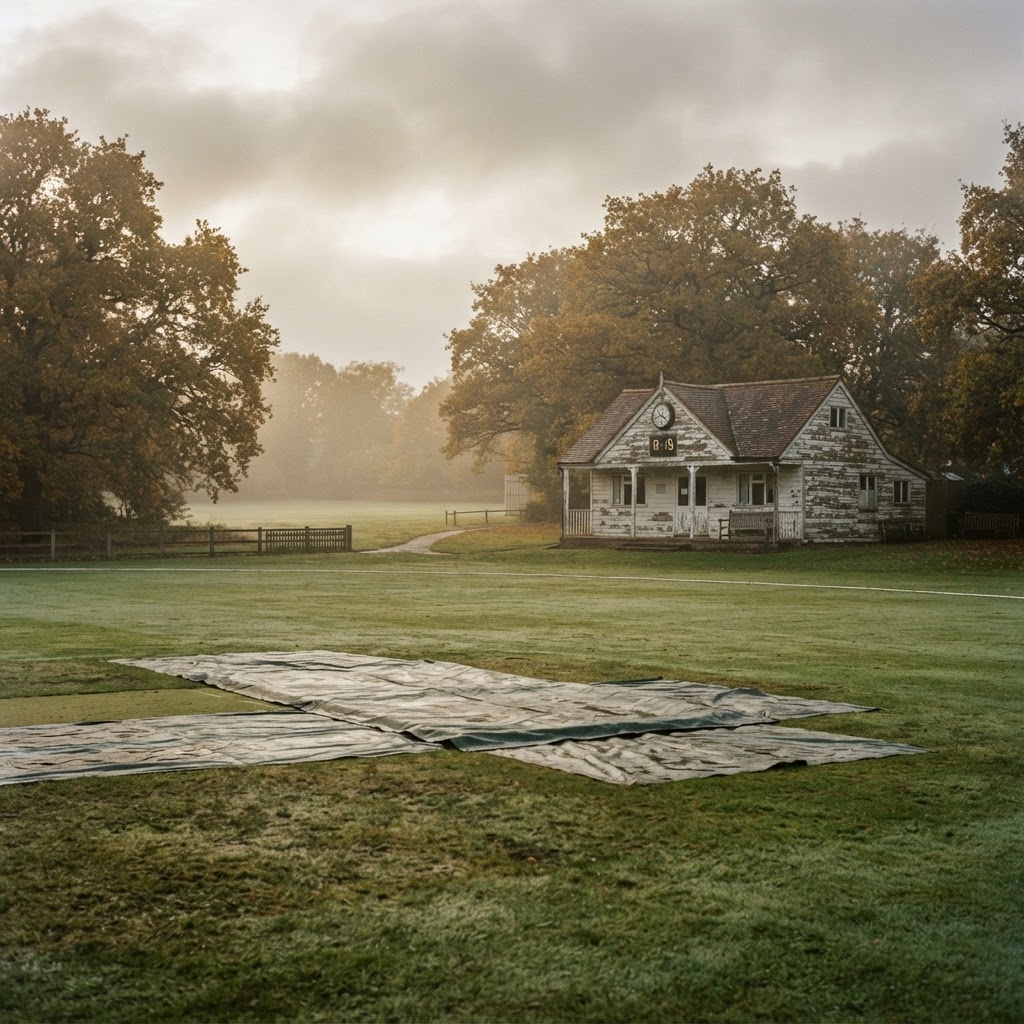
You cannot talk about village cricket grounds without talking about the pavilion. Not the modern concrete-and-glass structures that have replaced them in too many places, but the originals — the wooden-framed, slightly-leaning, paint-peeling pavilions that feel like they have been there forever and probably have.
A proper village cricket pavilion has a particular smell. Damp, old wood, a faint trace of embrocation, tea that has been brewing since before you arrived. The honours boards on the wall list club records going back decades. The photos in frames show teams from the 1950s and 1960s squinting into the sun, pads strapped on, arms folded, looking quietly pleased with themselves. Somewhere on a shelf there is a battered scorebook from a match in 1978 that nobody has ever thrown away.
The pavilion is where the stories get told. It is where the post-match debrief happens — which is really just an extended conversation about what went wrong and whose fault it was, and then gradually about other things, and then somehow it is nine o'clock and the ground is dark outside and nobody quite knows how the time went. That is what a pavilion is for. Not just shelter from the rain. A place to gather.
Why These Grounds Need Protecting
Here is the uncomfortable truth that sits underneath all of this: village cricket grounds are under threat in ways that they have never been before. Development pressure on green belt land is relentless. Club memberships that were once replenished naturally from local communities now have to be actively recruited. The cost of maintaining a ground — the square, the outfield, the kit, the pavilion — falls on volunteers who are getting older and on club accounts that are frequently overextended.
In the last two decades, dozens of village clubs have folded or merged. Grounds that were once the social centre of their communities have been sold for housing or simply abandoned. This is not a crisis that makes the news in any meaningful way, because village cricket is not glamorous and it does not have a broadcast deal or a famous sponsor. But it is happening, quietly, in parishes all over the country.
The England and Wales Cricket Board talks about growing the game, about bringing in new audiences, about making cricket relevant to younger generations. All of that is worth doing. But none of it means anything if the grassroots infrastructure — the clubs, the grounds, the volunteers, the village pitches — is allowed to disappear. You cannot grow a game from the top down. The roots have to be alive.
October at the Village Ground
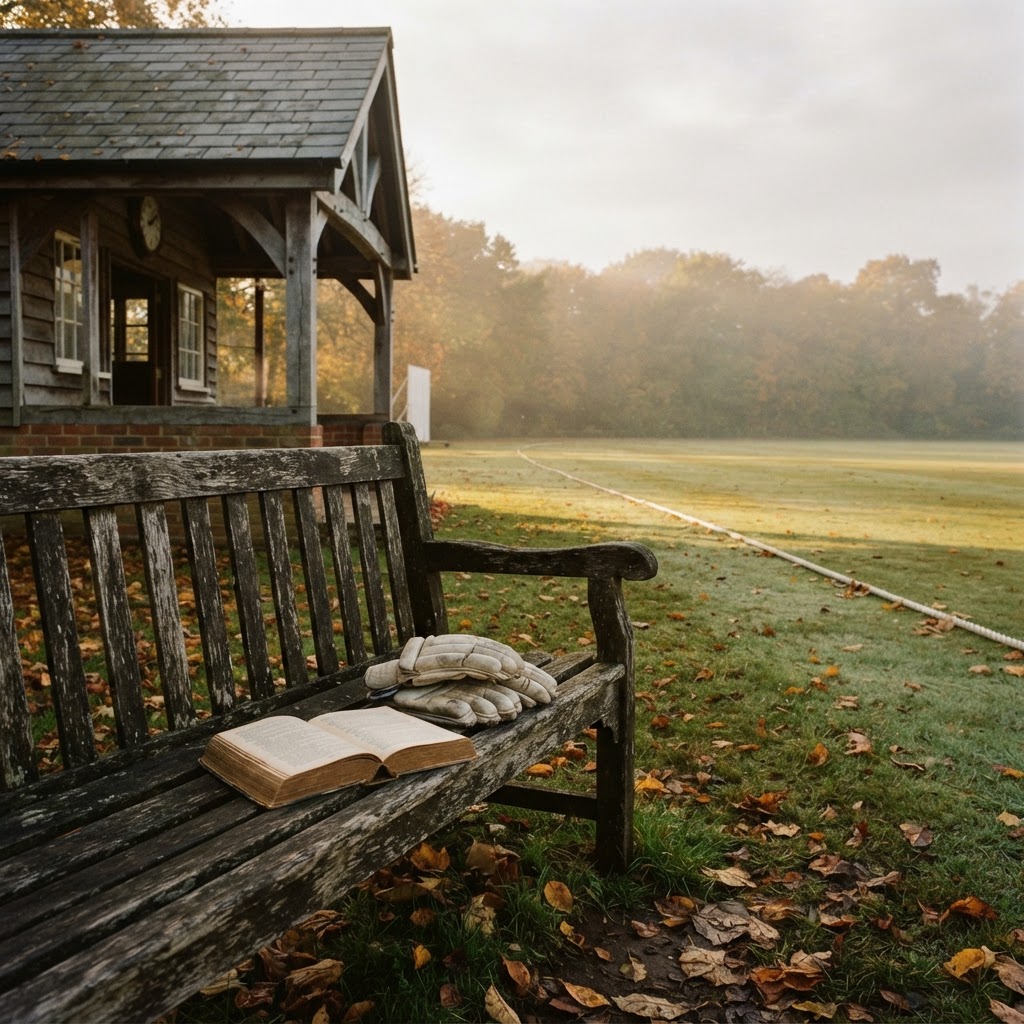
October is when village grounds feel most like themselves, strangely enough. The season is over. The square is resting. The outfield grass has grown back thicker without the regular mowing. There is probably a light frost on the covers in the morning and the pavilion is locked until spring.
But people still turn up. Not to play — just to be there. To do the things that keep a club alive through winter: repainting the sight screens, clearing the drainage ditches, replacing the guttering on the pavilion that has been leaking since August. A handful of members who will spend three hours on a cold Saturday doing maintenance work on a ground that will not be used for another six months, simply because the alternative — the ground being left to deteriorate, the club drifting — is unthinkable.
This is what village cricket looks like from the inside. Not the long drives and warm evenings of summer. The unglamorous part. The part that keeps the whole thing going. And there is something in that commitment — in the willingness to turn up on a grey October morning to clear the leaves off the outfield — that captures everything good about the sport.
The Thing You Cannot Put Into Words
There is a version of cricket that exists on television, full of statistics and slow-motion replays and expert analysis. And then there is the cricket that exists on a village ground on a Saturday afternoon in August, where the scorer has lost count of the extras, someone's dog has wandered onto the pitch twice, and the batting side just needs fourteen to win off the last three overs and the whole atmosphere has gone quiet in a way that nobody planned.
That version of cricket — small, imperfect, quietly intense — is the one that most of us carry with us. The one that explains why we still care about the game. Why we still read about it in winter. Why we turn up in October to paint the boundary boards when there is absolutely no logical reason to do so.
The best village cricket grounds in England are not famous. You will not find most of them in any guidebook. They do not have floodlights or a hospitality suite or a sponsors' board. What they have is something rarer and harder to manufacture: a sense that they matter, that they belong to the people who use them, and that they will still be here, more or less, long after everything else has changed.
That is not nothing. That is almost everything.
If you love cricket for what it is at its core — the ritual, the community, the quiet moments as much as the big ones — our tees were designed with that same mindset. Worn-in, understated, made for people who get it. EXPLORE THE COLLECTION →