The Art Of Looking After Your Cricket Bat Over Winter
How should I look after my cricket bat over winter?
The Bat Doesn't Stop Existing When The Season Ends
There is a particular kind of melancholy that descends in October. The covers go on the square, the sight screens get folded away, and the smell of linseed oil and cut grass starts to feel like a memory rather than a Saturday morning routine. For most club cricketers, the end of season means shoving the kit bag in the boot of the car and forgetting about it until sometime in February when mild panic sets in about pre-season nets.
But your bat doesn't stop existing when the season ends. It just stops being used. And that distinction matters more than most cricketers ever bother to find out.
A good cricket bat is one of sport's great objects. It has weight and purpose. It has a grain structure that tells you something about the willow it came from, and a middle that — if you've been lucky enough to find it — feels like nothing else when you middle a drive. Looking after that object over winter isn't just about protecting an investment. It's about understanding what the thing actually is, where it came from, and why it deserves more than a cold garage and six months of neglect.
What Winter Actually Does To A Cricket Bat
English winters are not kind to English willow. The two things are, in a way, made for each other — the cricket bat and the English climate — but only during the season. Once the temperature drops and the humidity swings around unpredictably, willow starts to do what wood has always done: it moves.
Moisture in the air gets absorbed into the blade. Then dry spells pull that moisture back out. This repeated expansion and contraction does quiet, cumulative damage to the fibres of the willow. Edges become more susceptible to cracking. The face of the bat can develop hairline splits that are barely visible until you take a thick edge off a seaming ball in April and the whole thing gives way.
The handle is vulnerable too. The rubber or twine grip ages over winter, losing elasticity and grip. The cane within the handle — which provides that crucial flex and feedback — can dry and stiffen if the bat is stored somewhere with no moisture at all. Most cricketers think too much damp is the enemy. In reality, too much dry is just as bad.
So the goal of winter care isn't dramatic. You're not restoring the bat. You're maintaining the conditions it needs to stay exactly as it was when the season ended — and ideally, to be in better shape come April.
The Ritual Of The End-Of-Season Oil
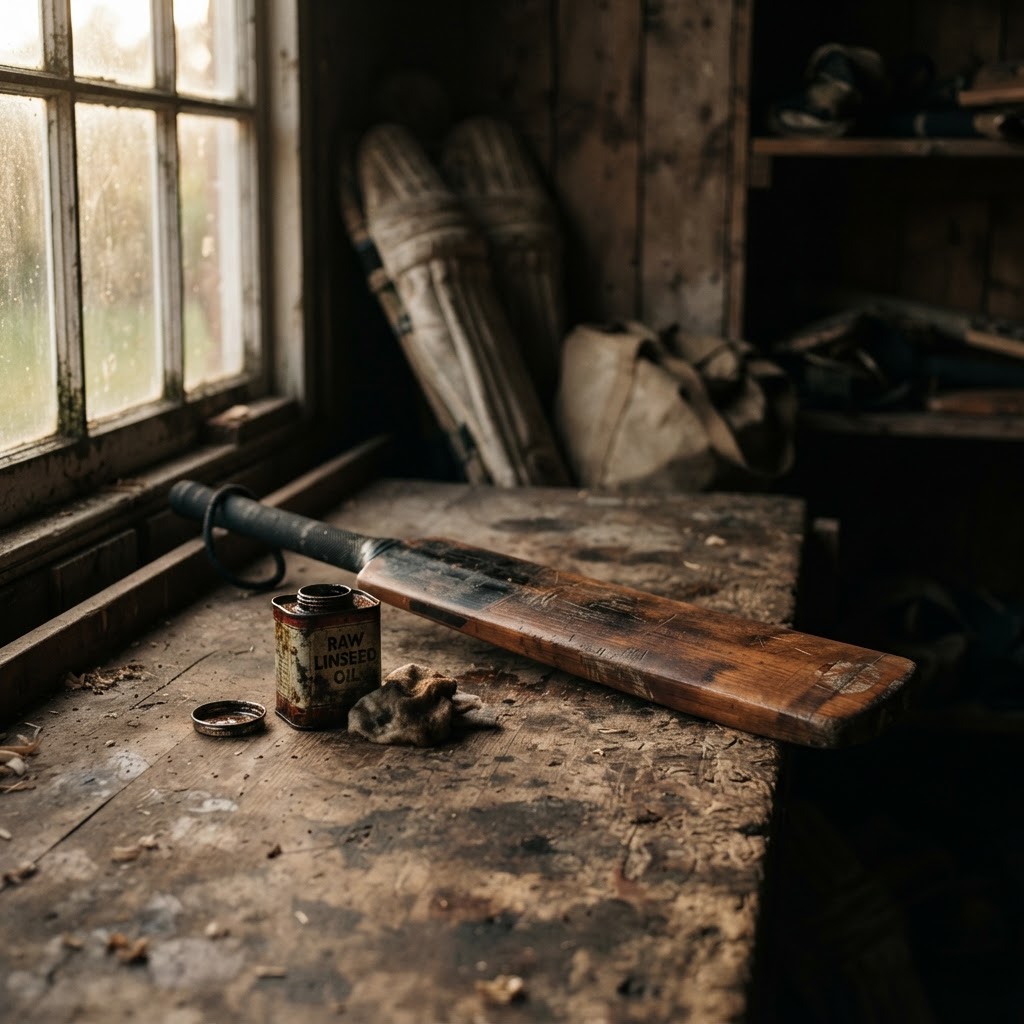
If there is one thing you do for your bat this winter, let it be this: oil it properly before you put it away.
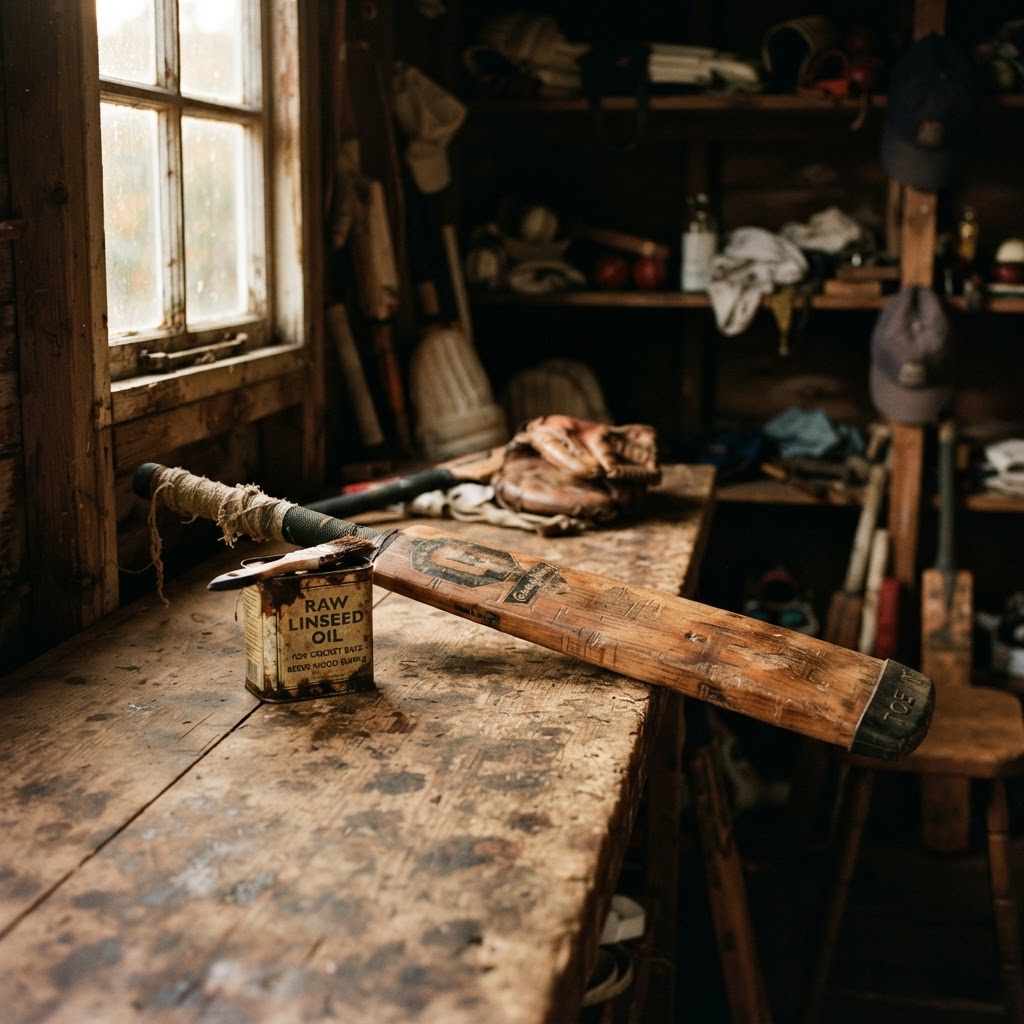
Raw linseed oil is the traditional choice and it remains the right one. It is absorbed slowly, it doesn't clog the willow's pores, and it has been doing this job for longer than any synthetic alternative has existed. Some modern bat oils are fine — many are just linseed-based anyway — but the old stuff works. A small amount goes a long way.
The process is unhurried by design. Apply a thin coat to the face, edges, and toe using a clean cloth or your fingers. Not the back — the back has a fibrous finish that needs to breathe, and flooding it with oil does more harm than good. Not the splice either. Let the oil sink in for 24 hours, then assess whether the willow feels thirsty enough for a second coat. Most bats need two or three applications done this way over the course of a week.
The toe deserves particular attention. It is the most exposed part of the bat — the part that sits closest to the ground, takes the most incidental moisture during a match, and is the first place a bat cracks if it hasn't been looked after. A toe guard is worth fitting if the bat doesn't already have one. They are inexpensive, they work, and no one has ever looked at a well-maintained bat and thought less of the person who swung it.
After oiling, the bat should be stored horizontally or face down — never standing upright on the toe for months at a time. The weight of the blade resting on the toe, combined with any unevenness in the surface below, can cause stress cracks over a long winter. A simple rack, a shelf, or even a rolled-up towel under the splice to keep the bat level will do the job.
Knocking In: A Winter Project Worth Doing Properly
October and November are also the time to think about whether your bat needs re-knocking. If you bought a new bat late in the season and barely used it, it almost certainly hasn't been knocked in enough to be safe under match conditions. A bat that hasn't been properly knocked in is a bat that will crack the first time it takes a hard blow.
Knocking in is the process of compressing the fibres of the willow face using a wooden mallet — gradually, patiently, over many hours. The willow responds to this repeated impact by hardening and toughening its surface. What begins as soft, slightly yielding wood becomes something that can take the impact of a leather ball bowled at pace without shattering.
The process takes time that the cricket season rarely provides. You are supposed to start with light taps, increase the pressure slowly over multiple sessions, work across the entire face and edges, and not rush it. In reality, most cricketers knock their bat in for an hour, decide it'll be fine, and discover it wasn't fine about three weeks into the season.
Winter gives you the time to do this correctly. An hour here and there over several weeks. Work the edges particularly carefully — they are the thinnest part of the blade and the most likely to split. A ball of old socks wrapped tightly is a decent substitute for a mallet in a pinch, though a proper cricket bat mallet is a worthwhile piece of kit that will outlast several bats.
If the bat has been used for a full season and you trust its condition, a light re-knock is still a good idea — even an hour with the mallet refreshes the face and catches any soft spots that have developed over the course of the year.
The Grip: Don't Sleep On It
The grip is the most neglected piece of maintenance in club cricket. Cricketers spend considerable time and money on bats, pads, and gloves, and then continue using a grey, cracked, sweat-hardened grip because replacing it feels like an unnecessary hassle.
It isn't. A worn grip costs you control of the bat. It is less comfortable, reduces the shock absorption through the handle, and in wet conditions becomes actively dangerous — the kind of thing that sends a full-blooded drive into the covers off the toe rather than the middle. Fitting a new grip takes five minutes with a grip cone and costs next to nothing.
October is the right time to replace yours. Strip the old one off, clean the handle with a damp cloth, let it dry completely, and fit the new grip using a cone and a slow, even roll. Some players use two grips — the extra thickness suits players with larger hands and reduces vibration from edges. It's a personal preference, but worth experimenting with over winter if you've never tried it.
Where You Store The Bat Matters More Than You Think
The garage is the enemy. It sounds harsh, but it is the truth. Most domestic garages in Britain spend winter cycling through cold damp nights and slightly less cold damp days, with occasional bursts of dry air when the heating from the house bleeds through. This is precisely the pattern of moisture fluctuation that does willow no favours.
A spare room, a cupboard inside the house, a cricket bag stored somewhere with reasonably stable temperature and humidity — these are the places your bat wants to be. Consistent conditions are what matter. The bat doesn't need warmth. It needs stability.
If you're storing a bat in a bag, make sure the bag itself is clean and dry before it goes away. A damp bag is a closed environment that holds moisture against the bat all winter. Shake it out. Air it. Let it dry completely before the zip goes shut until spring.
Why This All Matters Beyond The Practical
There is something else going on here, beyond the preservation of a piece of willow and cane. The rituals of cricket maintenance — the oiling, the knocking in, the careful storage — are part of how cricketers relate to their game during the months when there is no game to play.
An October evening spent oiling a bat is a quiet act of faith that April will come, that the square will be rolled and marked, that the season will start again and you'll be ready for it. It is a way of staying connected to something when the connections that usually sustain it — the matches, the dressing room, the walk to the crease — are temporarily unavailable.
The best cricketers, from Test level to village green, have always understood that the game lives in these quiet gestures as much as it does in any boundary or wicket. Caring for your equipment over winter is not just maintenance. It is a form of respect for the game itself, and for the player you're intending to be when the season starts again.
If you're the kind of cricketer who cares about the details — the rituals, the kit, the quiet side of the game — our range of cricket-inspired tees was made with exactly that mindset in mind. Understated designs for people who know what they love about cricket. EXPLORE THE COLLECTION →