The Dead Bat Shot: Why Cricket's Most Passive Stroke Is Its Most Brilliant
What is a dead bat in cricket and how do you play it?
The Shot That Does Nothing — And Everything
Cricket is full of shots designed to punish. The pull, the cover drive, the upper cut — these are strokes that announce themselves. They carry runs on the scoreboard and noise in the crowd. They end up in highlight reels and WhatsApp threads and the daydreams of nine-year-olds in the garden with a tennis ball.
The dead bat is none of those things.
It stops a ball. It scores nothing. It does not defy the bowler so much as it simply refuses to engage with him. And yet, watch a top-order batter play a perfect dead bat against a 90mph bouncer that rears off a length and dies softly two feet in front of the bat — there is a moment of pure cricketing genius in that absolute stillness. A moment where the game holds its breath, and then exhales.
We want to make a case for the dead bat as the most underrated, most misunderstood, and — quietly, stubbornly — most beautiful shot in cricket.
What Actually Is A Dead Bat?
For the uninitiated, the dead bat — sometimes called a "soft hands" defensive shot — is a technique where the batter consciously removes all resistance from the bat at the moment of impact. Rather than presenting a firm face and driving or blocking with authority, the batter allows the wrists to give, the grip to loosen, and the bat to absorb the ball's energy rather than redirect it.
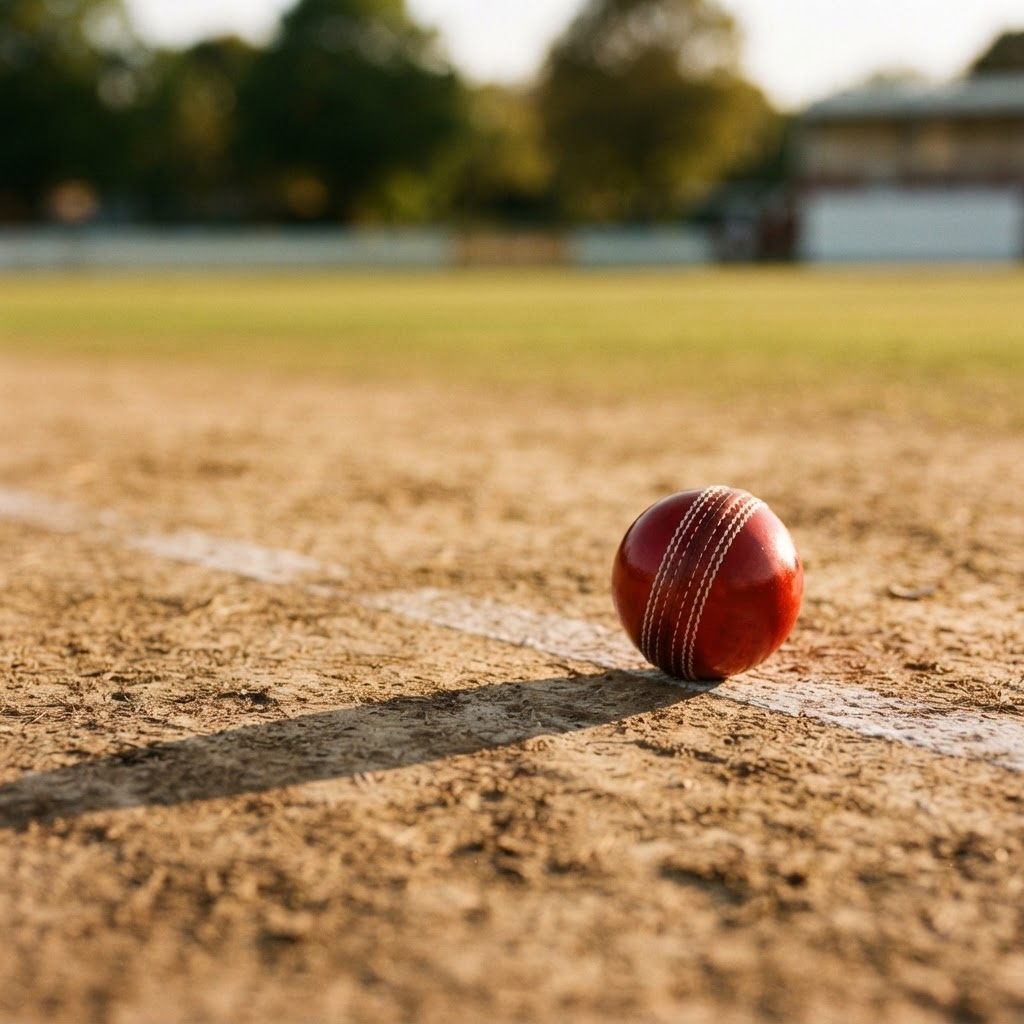
The result is that the ball loses all momentum and dies on the pitch, making it almost impossible to catch — either from an edge or a top edge. There is no ping, no clip, no nick carrying to the keeper. Just a dull thud and a ball rolling nowhere near a fielder.
The technique is primarily used against short-pitched deliveries aimed at the body or the gloves, or against balls lifting awkwardly from a length. It is the specific answer to a specific threat: the delivery designed not necessarily to take your wicket outright, but to force an error — a fend, a top edge, a glove — something defensive and panicked. The dead bat takes that weapon off the table entirely.
Understanding the shot technically is one thing. Understanding what it represents is quite another.
The Patience It Takes
Here is what most people miss about the dead bat: it requires the batter to do something psychologically very difficult. They must commit to doing nothing when every instinct says otherwise.
A ball rising sharply at chest height fires every self-preservation instinct in the human brain. The natural responses are to flinch, to push away, to hit. The dead bat demands that the batter override all of that and instead make a conscious decision to be still. To be soft. To receive.
That is genuinely hard to do. Not just physically — though the control required to time the relaxation of grip correctly at 90 miles per hour is extraordinary — but mentally. It requires a kind of acceptance. You are not trying to win the exchange. You are simply refusing to lose it.
Great batters understand the difference between those two things. Lesser batters — and most of us club cricketers playing on uneven outfields with the odd snake-in-the-grass delivery — confuse not-losing with being passive or boring. We feel compelled to do something. The dead bat is a lesson in the value of doing less.
There is a reason it features heavily in coaching philosophies around building long Test innings. Survive the new ball. Respect the conditions. Pick your battles. The dead bat is not a shot for every moment — it is a shot for exactly the right moment, deployed with discipline.
The Craftsmen Who Made It An Art Form
If you want to understand what perfect dead bat technique looks like, you look at the great Test match accumulators — the players who built careers on exactly this discipline.
Rahul Dravid is the obvious name. "The Wall" did not earn that nickname by hitting a lot of boundaries. He earned it by denying bowlers wickets for session after session, match after match. Watch his defensive technique and you see the dead bat used not as a last resort, but as a weapon in its own right. He made bowlers feel hopeless through sheer technical refusal.
Steve Waugh was another. Hard-nosed, competitive, utterly unromantic about it — but brilliant. His dead bat against the short ball was a statement: you will not get me this way. Try something else.
More recently, Cheteshwar Pujara has carried that tradition for India — a player who seems almost immune to pressure because he has so thoroughly mastered the art of doing nothing when nothing is the correct response. He has faced more balls per run than almost any batter of the modern era, and a significant portion of those balls have simply been absorbed by a dead bat and sent nowhere interesting.
What connects all of them is not just technique, but temperament. The dead bat is as much a character trait as a skill. It says: I am here for the long game. I am not performing for you. I am playing for the team and the match, and right now, this ball scores nothing and that is exactly what I intended.
Why Club Cricketers Struggle With It
Ask any club cricketer what they work on in the nets and you will hear drives, cuts, and pull shots. Ask how many of them specifically practise their dead bat technique and the answer will tell you something about why so many club innings end with an ugly fend to short leg.
At club level, there is a culture of doing something with every ball. A dot ball feels like failure. A defensive shot feels passive. A dead bat, to a lot of club cricketers, feels like giving up. The whole thing runs against the grain of park cricket's instincts, where entertainment often matters as much as occupation of the crease.
But this is also why club players who do understand it stand out so distinctly. There is always one batter at every club — usually the opener who bores everyone slightly for the first ten overs and then somehow ends up with 60 not out while everyone else came and went — who has quietly figured this out. They get under the skin of visiting bowlers not through aggression but through refusal. They are immovable not because they hit hard but because they don't give you anything to work with.
Those players tend to be the most respected in any dressing room, even if they're never quite the most celebrated at the bar.
The Sound Of A Perfect Dead Bat
There is something worth saying about the sound of a well-played dead bat, because cricket is as much an auditory game as a visual one.
A firm-handed block has a satisfying crack — a confident noise. A drive through the covers is a proper ring of leather on willow. But a dead bat has a sound all of its own: a short, muffled thud, like someone dropping a book onto a carpet. It is almost the absence of a sound, or rather the sound of energy being removed from a system rather than added to it.
That sound, when you hear it against a delivery that was genuinely threatening, is incredibly satisfying. It means the batter won that exchange completely. The bowler put everything into that delivery — trajectory, pace, movement off the seam — and got back: nothing. A ball sitting still two feet in front of the bat and a batter standing quietly upright, already thinking about the next one.
For people who really understand cricket, that sound is the equivalent of a nutmeg in football or a perfectly timed pass in rugby. It is a thing of beauty that only looks unremarkable to people who don't know what they're watching.
Why It Matters To How We Think About The Game
Cricket has always been a game about more than runs and wickets. It is a game about character, patience, strategy, and the long view. It rewards people who can hold on, hold back, and wait for the right moment rather than forcing the issue every ball.
The dead bat is the purest expression of all of that. It is cricket philosophy made physical. It says: not everything needs to be answered with force. Sometimes the best response is stillness. Sometimes the most powerful thing you can do is simply not be moved.
In a world increasingly obsessed with the T20 thrash and the Powerplay explosion — both of which are brilliant and joyful in their own right — the dead bat is a reminder of what Test cricket has always understood. That the game is long. That a single ball is rarely the moment of crisis it appears to be. That restraint is not weakness.
And honestly? That makes it one of the most interesting lessons the game has to offer, on and off the pitch.
If you love the quieter, more thoughtful side of cricket — the patience, the craft, the refusal to be rushed — the Deadbat tees collection was built with exactly that mindset. Worn by people who appreciate what the game really is. EXPLORE THE COLLECTION →