The Evolution Of The Cricket Cap: From Cotton To Culture
What is the history and meaning of the cricket cap?
There is a moment in every cricketer's life — whether they play in front of fifty thousand people or a handful of dog walkers on a village outfield — when they pull on a cap for the first time and feel something shift. It is not just about keeping the sun out of your eyes. It is about belonging somewhere. About wearing a colour that means something.
The cricket cap has been a fixture of the game for nearly two centuries. It has evolved in shape, material, and meaning. It has been handed over in dressing rooms with quiet reverence and pinned to pavilion walls like medals. And somehow, in an era of helmets, sun visors, and branded baseball caps, the traditional cricket cap survives — not just as a functional item, but as one of the most powerful symbols in sport.
This is the story of how that happened.
Where It All Began
The earliest cricket caps were purely practical. In the mid-nineteenth century, cricketers needed something to keep the sun off their faces during long days in the field. The solution was a simple peaked cap, cut close to the head, made from soft cotton or wool. Nothing ceremonial about it — just a functional piece of kit.
But cricket has always had a talent for turning the practical into the symbolic, and it did not take long for caps to become identifiers. County clubs adopted colours. Schools distinguished themselves through cap design. The cap became a way of saying: I play for them.
By the 1870s and 1880s, caps were firmly embedded in the visual language of the game. Look at any photograph from that era — the great bearded batsmen standing stiffly in sepia — and the cap is already doing cultural work. It is not just clothing. It is identity.
The County Cap Tradition
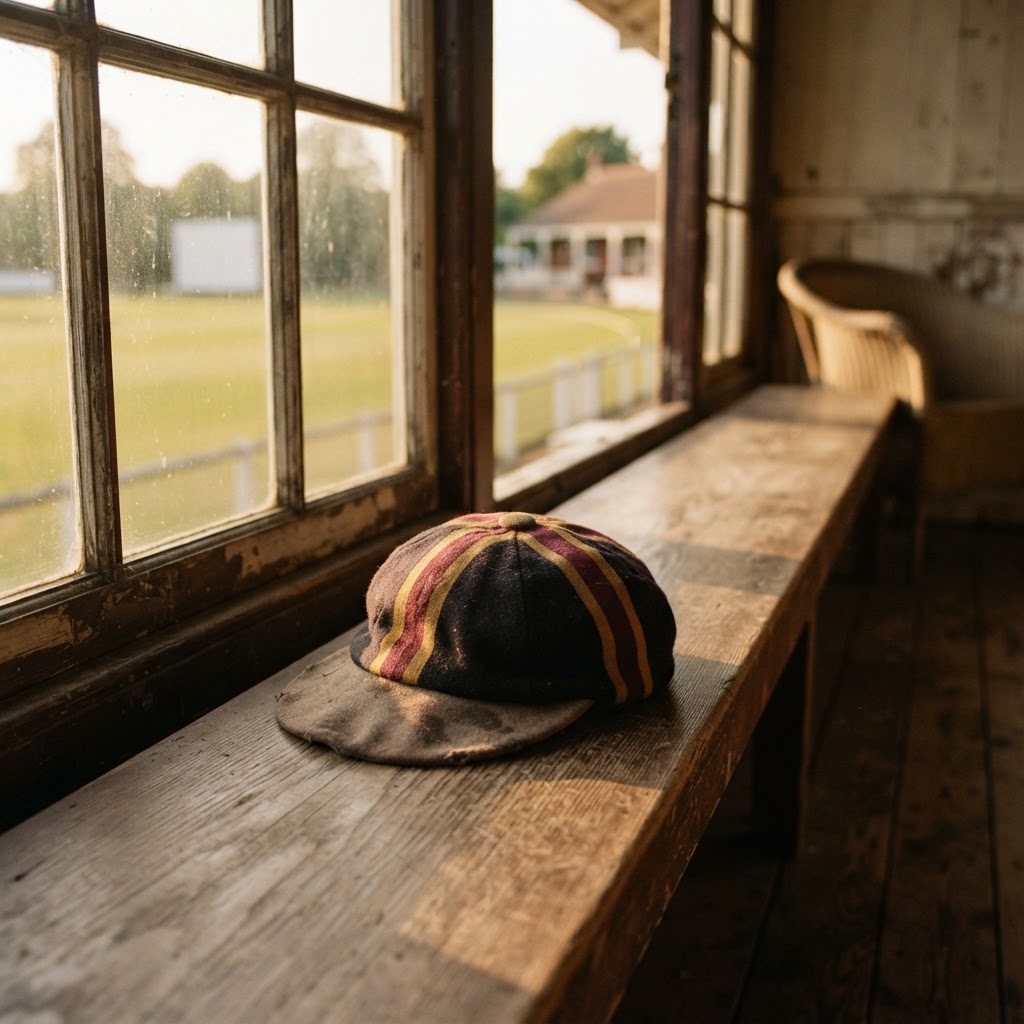
For generations of English cricketers, receiving a county cap was the moment that separated a trialist from a cricketer. It was not automatic. You did not get one for turning up. You earned it — through runs, wickets, seasons of consistent performance — and when it was handed to you by the captain or the club chairman, it meant the county considered you one of their own.
That tradition still exists at most first-class counties, though it has softened over the decades. Some counties now award caps more readily. Others have maintained the old rigour. But even the watered-down version carries weight that no sponsored kit deal can replicate.
The county cap also created a kind of visible hierarchy on the field. Uncapped players wore a different colour or a plain version. Spectators who knew the game could read the fielding positions and know, at a glance, who had been trusted by the club. There was something honest about that. The cap told a story without a word being spoken.
Each county's colours carry their own mythology. Middlesex's navy. Surrey's brown and gold. Yorkshire's blue and gold. Somerset's cider-soaked maroon. To wear those colours on your head was to wear the county's entire history — every Ashes hero who had come before you, every famous victory on a turning pitch in September.
The Baggy Green And The Weight Of A Nation
If the county cap tradition is quietly powerful, the Australian Baggy Green is something else entirely. It is probably the most mythologised piece of cricket clothing in existence — and the mythology is entirely deserved.
The Baggy Green is not a smart cap. It is not particularly comfortable. It goes shapeless and faded with wear, which is precisely the point. Australian players have spoken about the cap in terms that sound almost religious. Steve Waugh, who did more than anyone to codify the Baggy Green's symbolism in the modern era, described it as a link to every Australian cricketer who had ever played the game — a thread running back through Bradman, through Trumper, through all the great dry-summer names.
Waugh's teams in the late 1990s and early 2000s wore the cap in the field with conspicuous deliberateness. This was a statement. In an era when sun visors and baseball caps were becoming standard issue, Australia's best team in history chose the old green wool. They were saying something about what they valued. About continuity and respect for what came before.
New Australian Test players still receive their Baggy Green caps in a ceremony before their first match, usually presented by a former player. It is one of sport's great rituals — understated in delivery but enormous in meaning. No helmet, no pair of gloves, no bat has ever been treated with that kind of ceremony.
The Cap In Club And Village Cricket
Here is what is sometimes forgotten in discussions about Test caps and county colours: the cricket cap matters just as much at the bottom of the pyramid as it does at the top.
Every club cricketer who has ever rummaged through a kit bag looking for the team cap before a Saturday fixture knows the feeling. The cap is usually old. Often faded. Sometimes inherited from a player who retired a decade ago and left their kit behind in the pavilion. And yet putting it on still means something — you are part of this club, this weekend, this particular group of people who have chosen to spend their Saturdays in the field.
Village cricket clubs across Britain have caps in their colours that have been worn by hundreds of players over decades. Some of them have storied histories, passed through families or carried on tours abroad. The cap at village level is not about earning the right to wear it in any formal sense — it is simply a shared marker of belonging.
There is also something about the silhouette of the traditional cricket cap that has never really been improved upon. The baseball cap works perfectly well as a sun shade. But it does not look like cricket. The peaked cloth cap, sitting close to the skull, with its slight forward tilt — that is what cricket looks like. It is one of sport's most distinctive visual signatures.
The Helmet Age And What Was Lost
The introduction of the helmet in the late 1970s changed cricket's visual identity forever, and not entirely for the better. This is not a complaint about player safety — helmets are necessary and their adoption was long overdue. But something was lost when the cap disappeared from the batting crease.
For most of cricket's history, the batsman's cap was a constant presence. It was worn at the wicket. You could read a batsman's county or country from the boundary. The cap was part of the character on display — Dennis Lillee's white floppy hat, Viv Richards famously refusing the helmet and wearing his West Indies maroon cap at the crease as an act of supreme, intimidating confidence. That image — Richards cap askew, eyes cutting through the bowler — is one of cricket's defining photographs. It would not exist without the cap.
Helmets were right. But they cost us something of the cricket cap's visual drama at the game's most intense moments.
What survived, and continues to thrive, is the cap in the field. The fielding side still carries the cap as its primary identifier. And there has been, particularly in Test cricket, a visible return to the traditional cap among fielders who want to connect with something older in the game.
Why The Cricket Cap Still Matters
We live in an era of branding. Every piece of cricket kit has a sponsor logo, a social media handle stitched into the collar, a commercial reason for existing. The traditional cricket cap, in this context, is almost radical in its simplicity. It is a piece of cloth with a colour and a badge. That is all it has ever been. And that is exactly why it endures.
The cap does not need to be explained. It does not need a marketing campaign. It carries its meaning through years of accumulated use — through the players who wore it before you, through the grounds it has been worn on, through the catches taken and the long afternoons in the deep.
When a county awards a cap to a player after years of service, there is no fanfare. There rarely needs to be. Everyone in the dressing room understands what it means. When a Test debutant pulls on the Baggy Green or the maroon of the West Indies or the navy of England for the first time, words are inadequate.
Cricket is full of symbols — the red ball, the scoreboard, the crease, the pavilion gate — but the cap might be the most human of them all. It sits on someone's head. It goes where they go. It gets battered and faded and reshaped by weather and wear until it takes on the character of the person wearing it.
In a sport that has always understood the weight of history, the cricket cap carries more of it than almost anything else.
If the cricket cap stands for something — belonging, identity, quiet pride in the game — then that same spirit runs through everything we make at Deadbat. Our accessories collection is built for people who carry their love of cricket with them beyond the boundary. EXPLORE THE COLLECTION →