The Origins Of Cricket's Tea Break: Why We Still Stop For A Cup
Why does cricket stop for tea?
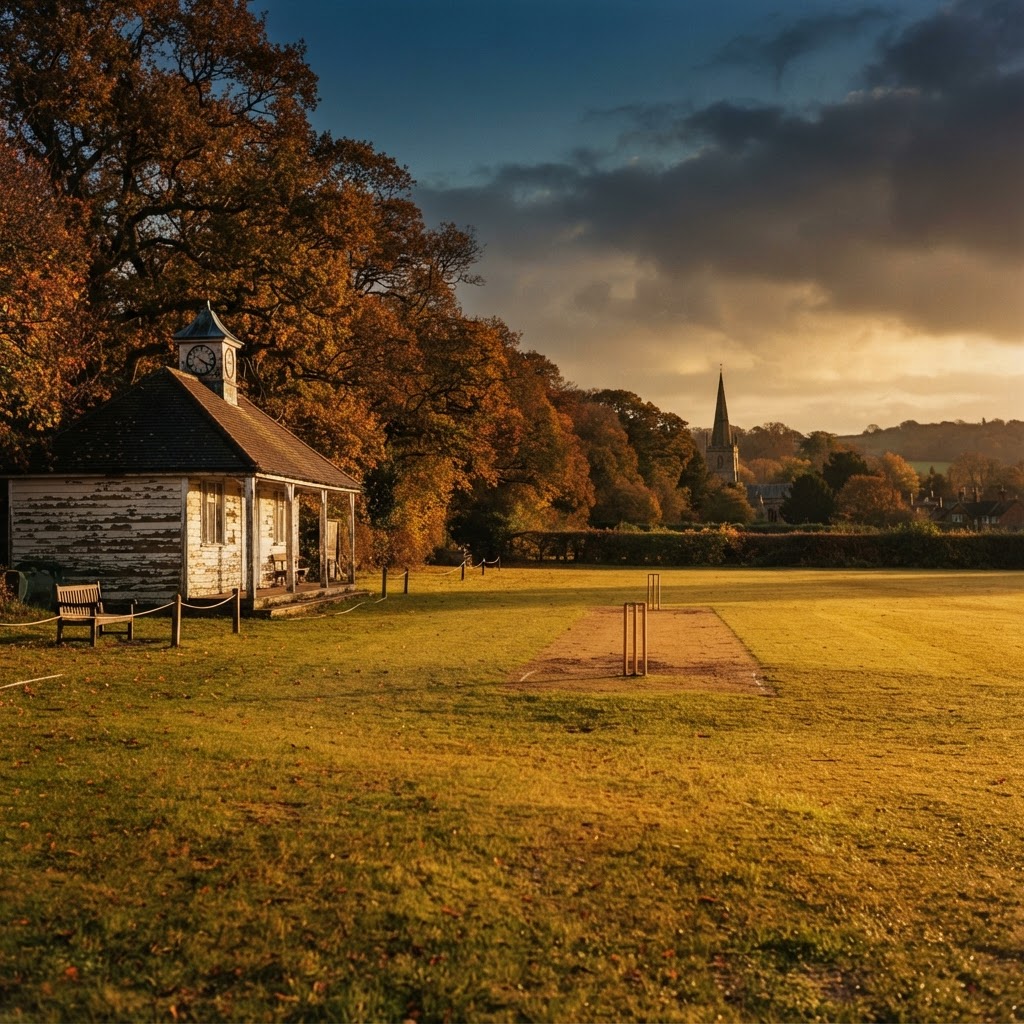
There are few moments in sport quite like the tea interval in cricket. The fielding side trudges off, the batters follow, and for twenty minutes the whole thing just… stops. No other major sport does this. Football doesn't pause for a biscuit. Rugby doesn't take a breather for Earl Grey. Yet cricket, stubbornly and gloriously, still does — and long may it continue.
For the uninitiated, it can seem almost comical. You're deep into a Test match, tension building, a spinner threatening to take a wicket with every delivery, and then someone blows a whistle and everyone goes off for sandwiches. But spend any real time around cricket and you start to understand that the tea break isn't an interruption to the game. It is part of the game. It always has been.
This is the story of where that tradition came from, why it survived the relentless modernisation of cricket, and what it still means to everyone from Test players to the bloke batting at number nine for a club side in Shropshire on a drizzly Saturday afternoon.
The Gentleman's Game and the Ritual of Tea
Cricket's relationship with tea is as old as the organised game itself. By the mid-nineteenth century, when cricket was beginning to establish the structures and rhythms we'd recognise today, the match day tea was already embedded in its culture. This wasn't a coincidence. Cricket was a game shaped, at least in its early organised form, by the English upper and middle classes — and tea, by the Victorian era, was the centrepiece of respectable social life.
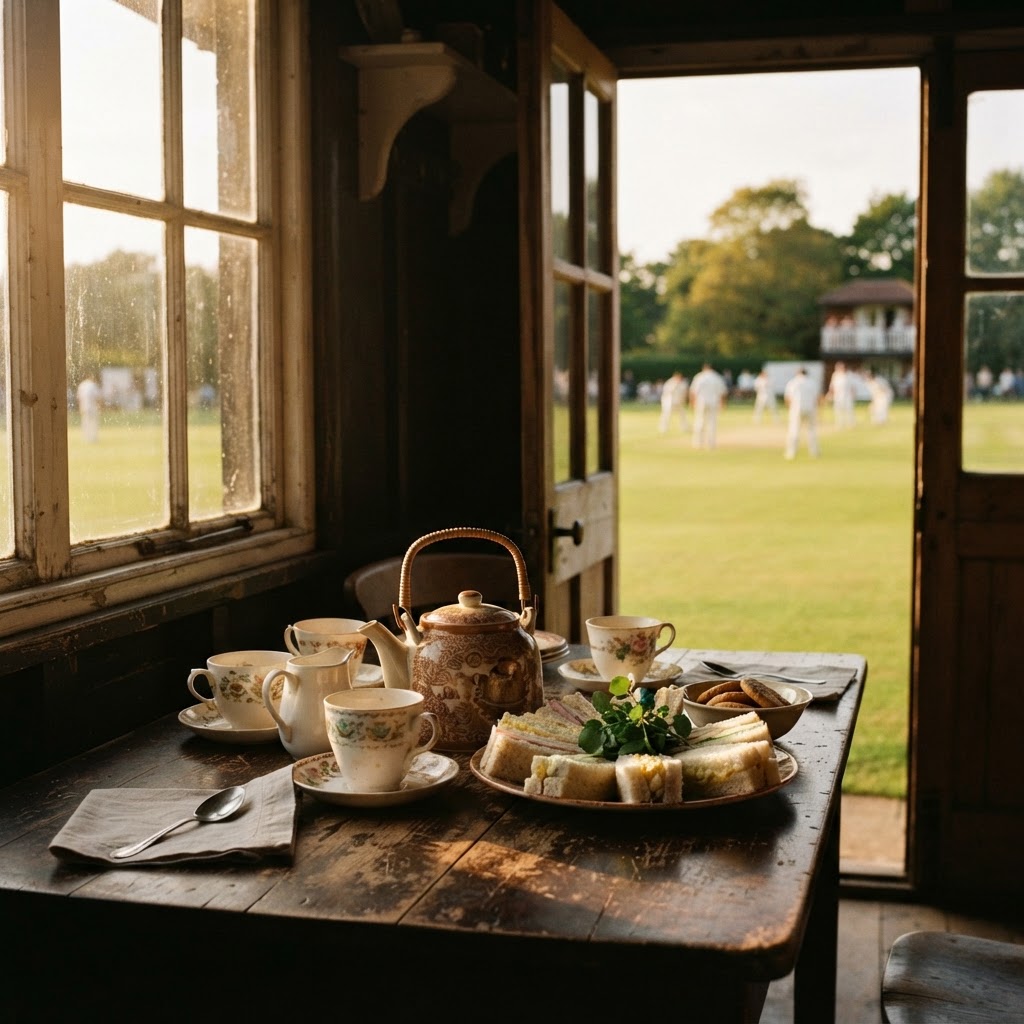
The tea interval wasn't just practical sustenance. It was a social occasion. Players, officials, and guests would gather in the pavilion or a marquee, and for twenty minutes the competitive edge softened. You talked to the opposition. You ate something. You took stock of the day. It was the game acknowledging, in its quiet way, that there was more to all of this than just runs and wickets.
County cricket, which formalised much of the game's structure through the second half of the nineteenth century, baked the tea interval into its scheduling without much debate. It was simply assumed. Of course you stopped for tea. What kind of people would you be if you didn't?
What the Tea Break Actually Looked Like
Ask anyone who played club cricket through the 1970s, 80s, or 90s and they'll have a tea interval story. Usually involving a particular kind of sandwich — white bread, slightly curled at the edges — and a fruit cake that had been sitting in a tin since approximately the previous winter. Sometimes a plate of biscuits. Always a large urn of tea that had been brewing slightly too long.
In Test cricket, the tea was more elaborate but the spirit was the same. At Lord's, the facilities for tea in the pavilion became something of a talking point in themselves. Players from visiting nations often remarked on it — the formality, the white tablecloths, the quiet hum of conversation before the battle resumed.
But it was never just about the food. The tea break was — and still is — a psychological reset. Bowlers who've been hammered reassess. Batters who've been under the pump gather themselves. Captains think. Coaches advise. Dressing room dynamics shift over the course of twenty minutes in ways that can change the course of a match.
Ask any cricket captain and they'll tell you that the session after tea is often the most fascinating of the day. Players come back refreshed, sometimes with entirely new intent. Momentum can swing sharply at tea in ways it rarely does at lunch.
How the Tea Interval Survived the Modern Era
When Twenty20 cricket arrived in the early 2000s and began reshaping the commercial landscape of the game, there were genuine questions about whether cricket's older traditions could survive. The IPL doesn't have a tea interval. T20 is built for brevity, not ceremony. And for a while it felt like the longer formats might absorb some of that energy and start stripping things back.
They didn't. The tea break survived. Not just survived — it's never really been seriously under threat in Test or first-class cricket. The ECB, Cricket Australia, the BCCI — none of them have ever floated the idea of removing the tea interval from the longer game. It would be like suggesting you remove the toss. Some things are structural to what the game is.
What's interesting is that the tea break has also remained a fixture in recreational cricket at almost every level. Club cricket in England still stops for tea as a matter of course, though what's on offer varies wildly. Some clubs take it seriously — home-baked goods, proper sandwiches, a spread that reflects genuine effort and club pride. Others produce the bare minimum and everyone politely pretends not to notice.
Either way, you stop. You sit together. You talk. And that matters more than most people articulate.
The Tea Break as Community
Here's the thing about the tea interval that doesn't get said enough: it's one of the main mechanisms by which cricket maintains its social character at the grassroots level.
A cricket match without tea is just two groups of people competing. A cricket match with tea is a social event. There's a difference, and it's not a small one. The tea interval is when the away side properly meets the home side. It's when the club's older members, who might have come just to watch, get to sit alongside players. It's when the bloke who's been umpiring all afternoon gets a cup and a biscuit and feels like part of what's happening.
In a world where sport at every level is increasingly transactional — turn up, play, leave — the tea break forces a pause. It says: we're going to acknowledge each other as human beings for twenty minutes before we go back to trying to get each other out. That's not sentimental. That's genuinely civilising.
There's also something important about what the tea interval does for younger players. For a teenager playing their first senior game, sitting in a pavilion at tea, listening to older players talk through what just happened on the pitch — that's an education. That's how cricket knowledge passes between generations. Not just through coaching sessions, but through exactly these kinds of informal, unhurried conversations over a cup of tea.
The Tea Break Around The World
While tea intervals are most culturally embedded in English cricket, the tradition has travelled everywhere the game has gone — though it wears different clothes in different places.
In the subcontinent, the tea break in club and domestic cricket has its own flavour. The refreshments differ — chai rather than Yorkshire Gold, different snacks, different rhythms — but the principle holds. You pause. You regroup. You reconvene.
In the Caribbean, where cricket's social dimension has always been vivid and expressive, the interval has historically been a moment of real community — ground staff, spectators, and players existing in the same space for a short while, the competitive intensity briefly suspended.
Australia has always had a slightly more functional relationship with cricket's gentler traditions, but the tea interval in Sheffield Shield cricket remains intact, and any Australian club cricketer will tell you that the afternoon tea at a local game is non-negotiable.
The format changes. The spirit doesn't.
Why It Still Matters
We live in an era that worships pace. Everything is faster, more streamlined, more optimised. The idea of stopping a sporting contest for twenty minutes so participants can have a sandwich and a hot drink sounds, in that context, almost satirical.
But cricket has always operated on its own timeline, and the tea break is one of the purest expressions of that. It says: this game is long enough, and important enough, that we can afford to stop. We can afford to breathe. We can afford to be people for a moment, not just competitors.
For fans at the ground, the tea interval is often the most sociable part of the day. You stretch your legs, get a drink, talk to the people around you about what you've just watched. The conversation that happens at tea — in stands, in pavilions, at boundary ropes — is part of what makes a day at cricket different from almost any other sporting experience.
And at club level, where most of us experience the game, the tea break is genuinely part of why we play. Not the only reason, but a real one. Cricket is a long day. The physical and mental effort is real, even at recreational level. The tea interval is the game's acknowledgement of that — a moment of collective restoration before the afternoon session begins.
Remove it and you'd have a slightly faster cricket match. Keep it and you have a tradition that connects every club cricketer alive today to everyone who's ever played this game. That's not nothing. That's everything.
If you love cricket for its culture as much as its competition — the rituals, the traditions, the unspoken codes — the Deadbat tees collection was made for that mindset. Worn on match days, at the ground, or anywhere the game matters. EXPLORE THE COLLECTION →