The Art of the Coaching Net: What Winter Really Teaches You About Cricket
What do cricketers work on during winter coaching nets?
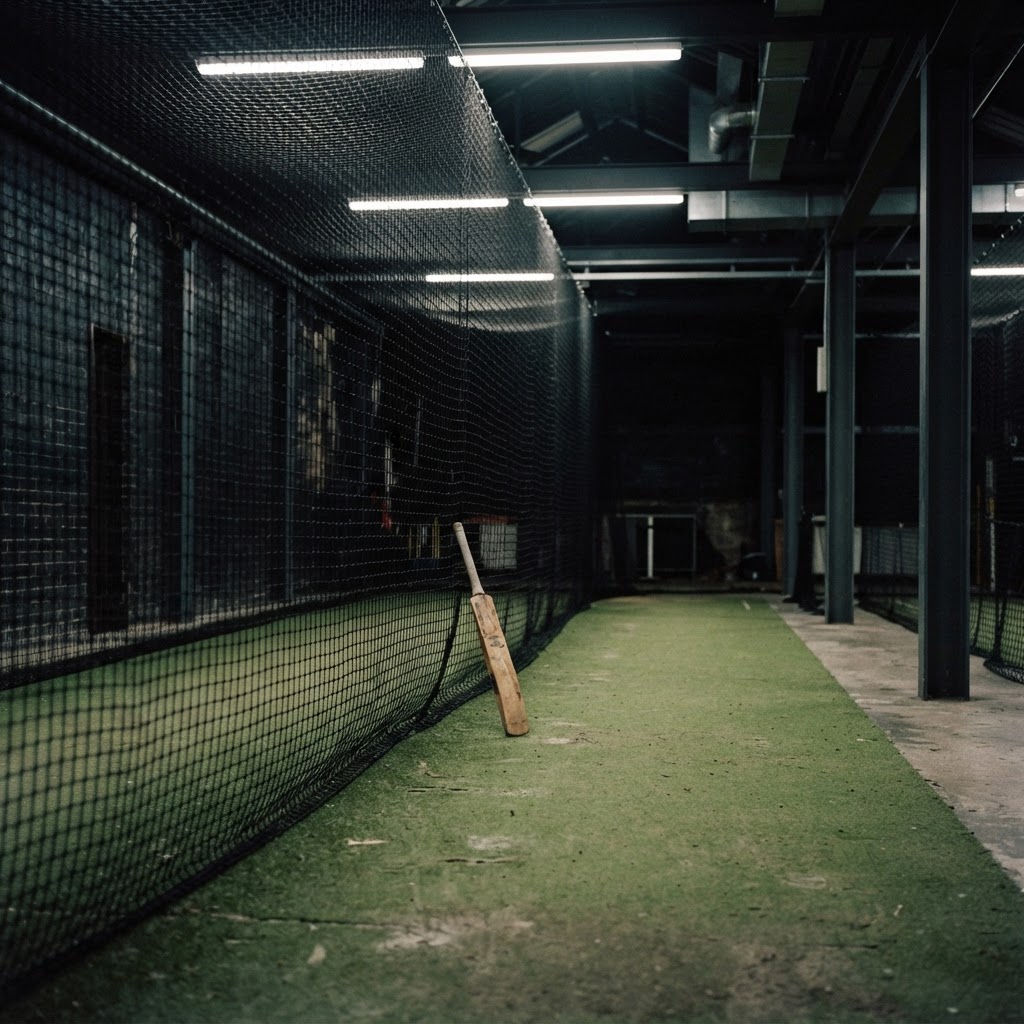
There is a particular kind of dread that comes with the first indoor net session of winter. The artificial turf smells faintly of rubber and ambition. The lighting is harsh and unforgiving. The ball skids low off a length in ways that would be unacceptable on any self-respecting outdoor pitch. And yet, for a certain type of cricketer, there is nowhere else they would rather be in November.
Winter coaching is not glamorous. It is not the stuff of highlight reels or end-of-season award speeches. It is repetitive, sometimes frustrating, and occasionally humbling in ways that outdoor cricket — with its distractions, its social rituals, and its ability to paper over technical cracks — rarely manages. That is precisely why it matters.
The cricketers who come back better in April are almost always the ones who spent the dark months doing the unglamorous work. Not just hitting balls, but actually thinking about their game. Listening to coaches. Watching footage. Drilling the same movement pattern until it stops feeling like a drill and starts feeling like instinct.
Why Winter Is When Cricket Tells You the Truth
During the season, there are a hundred ways to survive without fixing anything. You nick one through the slips and call it form. You bowl a wayward over and blame the conditions. You drop a catch and move on before anyone notices. The game keeps rolling. The scorecard hides the evidence.
Winter removes all of that. In a net, there is no context, no match situation, no convenient narrative to hide behind. There is just your technique, exposed under artificial light, with a coach standing behind you either nodding or wincing.
This is cricket at its most honest, and honestly, some players cannot handle it. There is a particular breed of club cricketer who is brilliant at cricket in theory — who talks a magnificent game at the bar, who has opinions about footwork and seam position and head stillness — but who quietly vanishes once the nets open in November. They return in April having done very little, wonder why their game has not moved forward, and begin the cycle again.
The ones who stay? They tend to have a different relationship with the game. They are not just playing cricket. They are studying it.
What a Good Coach Actually Does
There is a misconception that coaching is primarily about fixing things that are broken. The best coaches will tell you it is more complicated than that.
A good cricket coach does not just watch your backlift and reach for a checklist. They watch how you move, how you think, how you respond to pressure — even the artificial pressure of a net session. They notice whether you reset after a bad ball or carry the tension into the next one. They see whether you are batting or just surviving.
The best coaching relationships in cricket are built on trust and honesty, and they take time to develop. This is why the cricketers who float between coaches, never quite committing to one person's method, often make the least progress. Coaching requires vulnerability. You have to be willing to unlearn things. That is uncomfortable, and it takes a relationship that can sustain the discomfort.
At grassroots level, good coaches are worth their weight in gold. They are often not paid much — sometimes not paid at all — and they give up their winter evenings to stand in a cold sports hall watching club cricketers work through their demons. The community owes them more credit than it usually gives.
The Specific Joy of Getting Something Right in a Net
There is a moment that every serious cricketer knows. You have been working on something for weeks — maybe it is staying leg side of the ball, maybe it is getting your front foot closer to the pitch of the delivery, maybe it is just keeping your head still at the point of release. And then, without fanfare, it clicks.
Not perfectly. Not permanently. But for a handful of deliveries, the thing you have been drilling becomes something that feels almost natural, and you hit the ball in the middle of the bat with a sound that is quite different from all the other sounds in the net.
This is one of cricket's quiet pleasures. Nobody celebrates it. There is no crowd. The coach might give a nod. But you feel it, and you know something has shifted, and you file it away as proof that the work is worthwhile.
This is what keeps cricketers coming back to nets through November and December and January, when the season feels impossibly far away. Not the prospect of runs or wickets, but the pursuit of that feeling — the sensation of something working the way it is supposed to work.
The Bowling Side of Winter: The Dark Art of the Net Bowler
Most conversations about winter nets focus on batting, which is understandable but slightly unfair. Bowlers have their own complicated relationship with indoor cricket.
For seamers, indoor nets are a constant negotiation between effort and preservation. The surfaces are often too short. The run-ups are cramped. Bowling at full tilt risks injury when the rhythm is not quite there. And yet, bowling at half-pace all winter is its own problem — you can easily fall into lazy habits that are very hard to unlearn once the season starts.
The smarter seamers use winter nets to work on specific things rather than just going through the motions. Release points. Seam position. The subtle adjustments of wrist angle that change the ball's behaviour. Things that are almost impossible to focus on during a match, when the scoreboard and the captain and the conditions are all demanding your attention at once.
Spinners, meanwhile, often find winter nets more rewarding than seamers do. The shorter surfaces are less of an issue. The focus can be entirely on flight and drift and turn, on the craft elements of spin bowling that require repetition without the pressure of live match consequences. Some of the best spinners in club cricket are the ones who spent their winters bowling at a single stump, over and over, until they could hit it from twenty-two yards almost at will.
What Youth Coaching Gets Right — and What It Sometimes Gets Wrong
Winter is also when junior coaching programmes run at their most intensive, and this matters enormously for the long-term health of cricket as a sport and a culture.
The best junior coaching does something that adult coaching sometimes forgets: it prioritises enjoyment alongside development. Young cricketers who fall in love with the game do so because someone made it feel worth falling in love with. That is about more than technical instruction. It is about stories, and history, and the sense that cricket is part of something bigger than the net session you are standing in.
The coaches who connect with young players tend to be the ones who talk about cricket the way a fan would — with enthusiasm and opinion and the occasional digression into why a particular shot or delivery is beautiful. They are not just transmitting information. They are transmitting a culture.
Where junior coaching sometimes struggles is in an overemphasis on technique at the expense of instinct. Cricket, at its best, is intuitive. Some of the most technically unorthodox batters in history have been magnificent players because they trusted their instincts under pressure. The coaching environment should build both — the technical foundation and the confidence to deviate from it when the moment demands.
The Quiet Discipline of Turning Up When No One Is Watching
There is something in cricket culture that respects the idea of doing the work without an audience. It is not a flashy sport at its core, whatever the T20 era might suggest. The game has always rewarded patience, repetition, and the willingness to put in time that nobody will ever see.
Winter nets are the purest expression of that idea. You are not playing for anyone. You are not building a stat. You are not making a highlight. You are just trying to get better, one session at a time, in a cold hall somewhere with a bag of old balls and a coach who believes you are capable of more than you showed last season.
That is cricket. Not the television version, not the franchise version — the real version, the one that has been keeping people coming back to the game for generations. The version built on craft and community and the quiet satisfaction of a job done properly.
April will come eventually. When it does, the cricketers who put in the winter will know exactly who they are.
If you're the kind of cricketer who takes the quiet work seriously — the nets in November, the early mornings, the drills nobody else sees — the Deadbat hoodie range was made with exactly that mindset. Warm, understated, built for people who love the game on its own terms. EXPLORE THE COLLECTION →