Why Every Cricketer Should Bowl In The Dark At Least Once
What is the point of cricket net practice in winter?
The Net Session Nobody Talks About
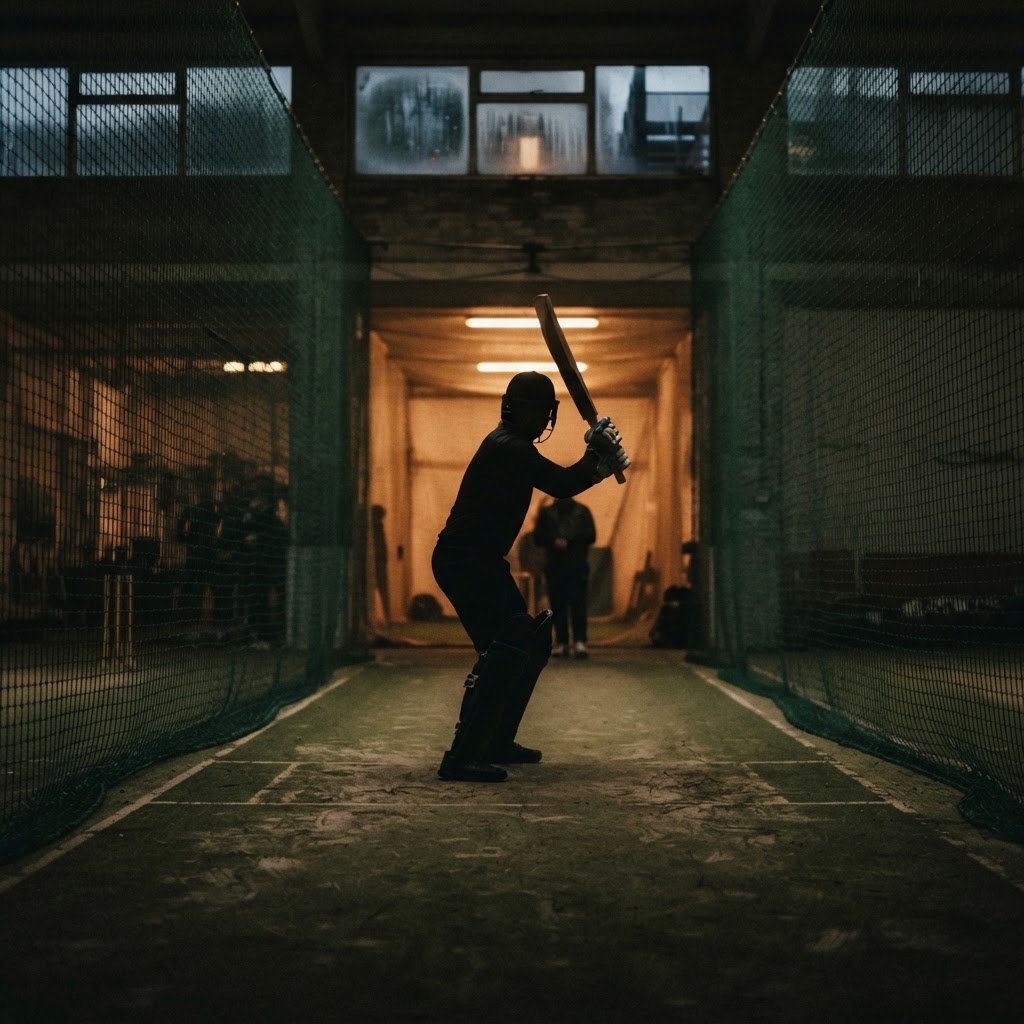
There's a particular kind of cricket that happens in November. Not the glamorous kind. Not the kind that ends up on highlight reels or gets discussed on podcasts. It happens in a sports hall somewhere, under humming fluorescent tubes, on a surface that behaves nothing like a real pitch, with a plastic stump wedged into an artificial mat and a bowler who's wearing tracksuit bottoms and a hoodie they've had since university.
This is net cricket. Winter net cricket. And it is, in its own strange way, the purest version of the game most of us will ever play.
Outdoor cricket is performance. It has an audience, a scorecard, a result that matters to someone. But winter nets strip all of that away. You're left with just the skill, the repetition, and the honest conversation between bat and ball. No excuses about the light. No blaming the outfield. Just you, your technique, and whatever it is you're quietly trying to fix before April.
What The Indoor Net Actually Reveals
Walk into any cricket net in December and you'll see the game's great equaliser at work. The opening bat who looked imperious all summer is suddenly poking at deliveries he'd have driven through the covers in June. The tearaway quick is bowling off four paces and still spraying it wide. Everyone is learning something they'd rather not admit.
This is the gift that winter nets give you, if you're willing to receive it. They reveal the gaps in your game that match pressure usually papers over. When you're batting in the middle on a good surface with two set partners before you, adrenaline and instinct carry you through a lot. But in a net, there's no adrenaline. There's no urgency. There's nowhere to hide from a technical flaw that's been sitting in your game for three seasons.
Great coaches have always known this. The net is a diagnostic tool as much as a training ground. Watch how a batter moves in a net — really watch them — and you'll see the truth of their technique in a way you simply can't during a match. The feet that don't quite move. The backlift that goes to gully. The trigger movement that's three inches too far across. These things exist in matches too, but matches move too fast to notice. Nets slow everything down.
The Strange Sociology Of The Sports Hall
There's also something socially fascinating about winter nets that nobody really writes about. The cricket club in summer has a clear hierarchy. The first team has status. The weekend gets structured around who plays where and for whom. Social groupings form along team lines.
But in the indoor net, all of that collapses. The first-team opener is in the same lane as the lad who played two second-team games in August. The club captain is in a hoodie taking throwdowns from a sixteen-year-old who bowls off-spin. Rank disappears. What replaces it is something more honest — shared effort, shared cold, shared cups of tea from a machine that never quite gets the temperature right.
Winter nets are where cricket clubs actually build themselves. Not in the sunshine of a June afternoon but in the fluorescent grind of a Tuesday evening in January. The banter that bounces around a sports hall — the chirping when someone gets beaten on the outside edge, the applause when the spinner finally gets one to turn — this is the connective tissue of a cricket club. This is what carries people back through the gate come April.
Repetition As Ritual
There's a philosophical dimension to net practice that cricket, more than most sports, has always understood. The game has a deep relationship with repetition. Every batsman has a trigger movement they run through before every ball. Every bowler has a run-up they've refined to the centimetre. Cricket is, at its core, a sport built on the groove — the idea that the correct movement, repeated often enough, becomes automatic, becomes instinct, becomes you.
Winter nets are where the groove gets built. Not in one session. Not in ten. But across a whole winter of Tuesdays, something changes in a cricketer's body. The hands soften. The footwork sharpens. The head position settles. These are tiny, invisible improvements that won't show up in any scorecard but will quietly make you a better player by the time the season starts.
The best cricketers have always understood this. There's a reason Brian Lara was apparently obsessive about net practice even at the peak of his powers. There's a reason that coaches talk about ten thousand hours. The groove isn't maintained by talent. It's maintained by repetition. And the only place to do that repetition in November is under those fluorescent lights, in a lane that smells faintly of old trainers, against a bowler who keeps going too wide of off stump.
The Bowling End Of The Bargain
Here's the thing that winter nets consistently reveal that outdoor cricket often obscures: bowling is underrated, endlessly. Not in terms of match importance — everyone knows a good bowling attack wins you games — but in terms of the craft and the satisfaction that comes from doing it well.
In a net, when you're bowling, there's an intimacy to the contest that the bigger ground dilutes. You're close to the batter. You can see exactly where the ball lands, exactly how it moves, exactly whether your seam position is doing what you think it's doing. You get immediate feedback in a way that bowling in the middle on a big outfield sometimes doesn't give you.
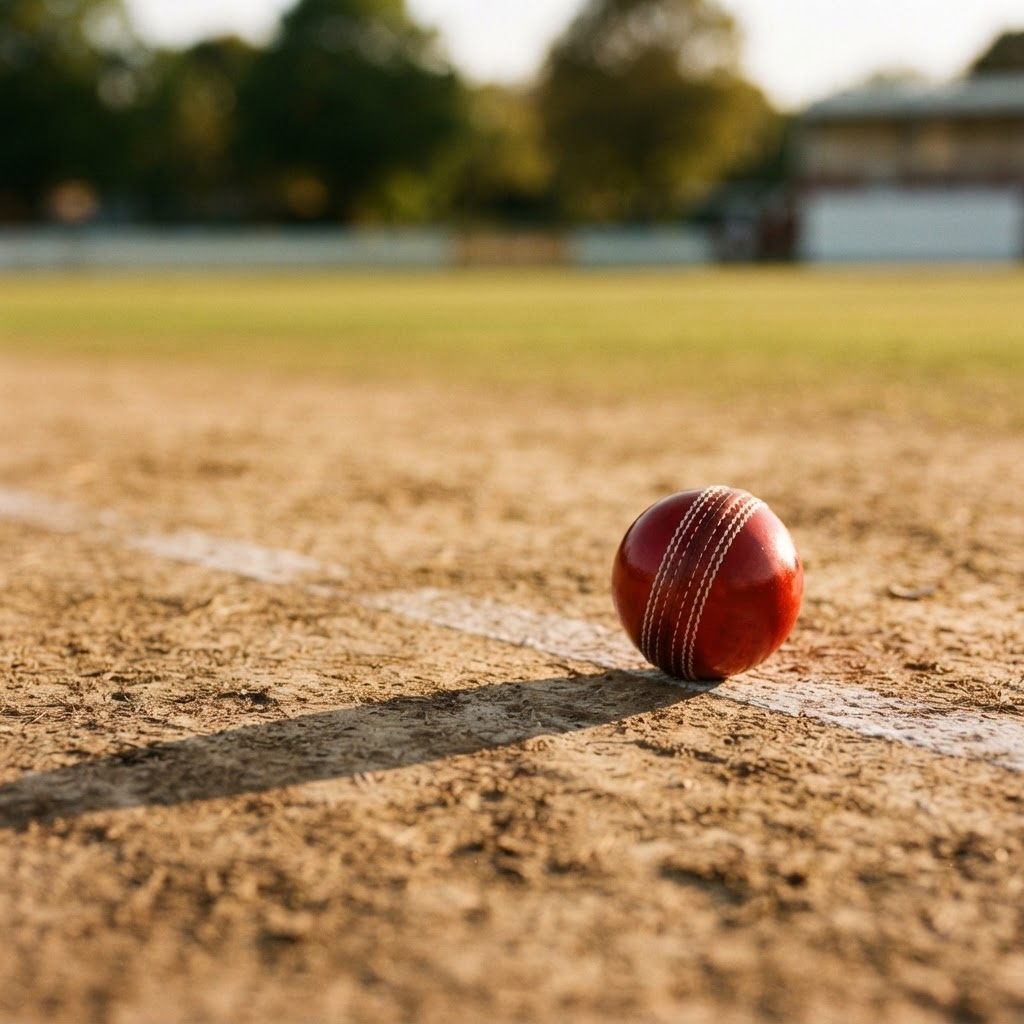
And when you get it right — when the ball pitches on a length and nips back and beats the inside edge — there's a satisfaction that is entirely private and entirely real. Nobody celebrates it the way they'd celebrate a wicket in a match. But the bowler knows. And that knowledge, that quiet sense of craft being executed properly, is one of cricket's great and underappreciated pleasures.
Winter bowling in nets is also where young quicks learn the most important lesson of their careers: that pace without control is just noise. The indoor surface exaggerates bad lines. The confined space makes wayward bowling look worse than it does in the open air. This is, frankly, a good thing. Learn to land it on a length in a net and the outdoor game becomes significantly more manageable.
What We Come Back For
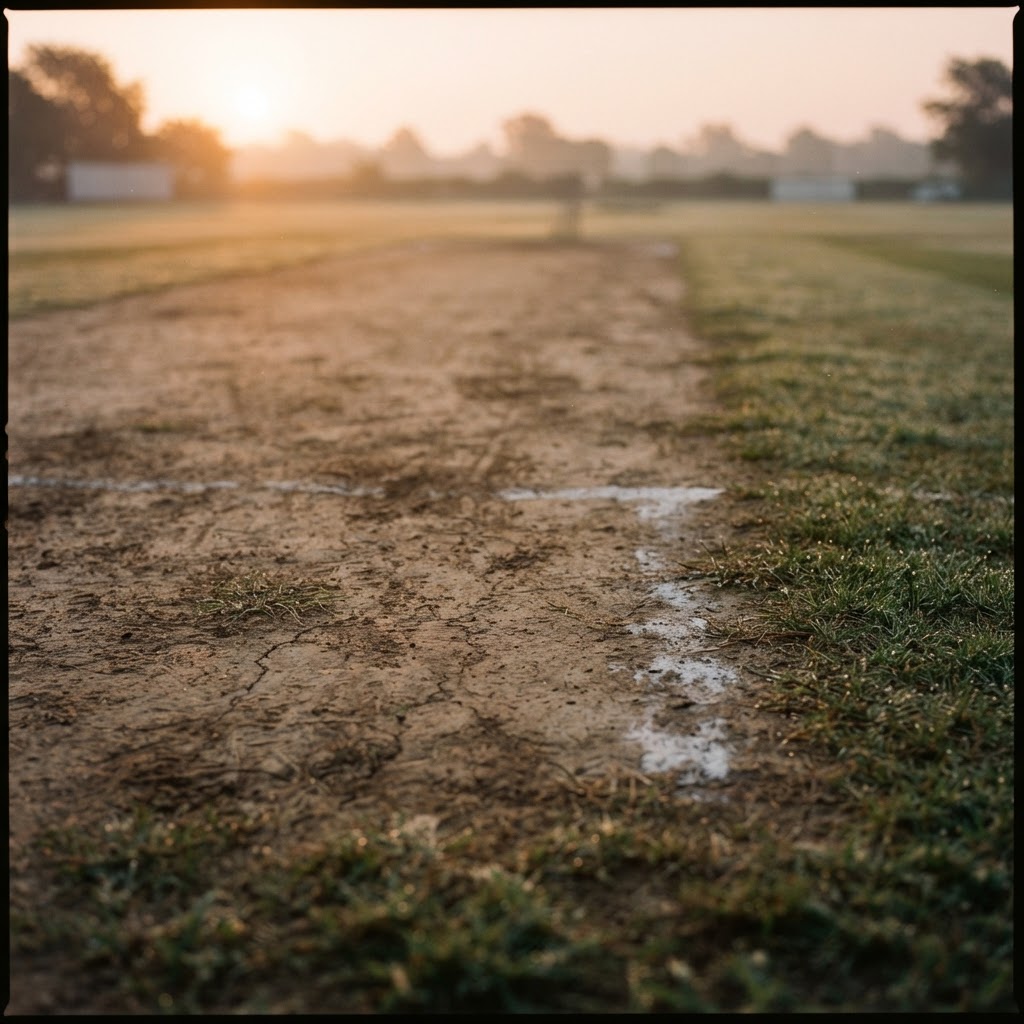
Come April, when the covers come off the square and the groundsman starts prepping the first pitch of the season, something shifts. The cricket community reconvenes. The smell of linseed oil is back. The whites come out of storage. And there's an almost universal feeling among cricketers of readiness — a sense that the months of preparation have been pointing at this moment.
That readiness doesn't come from nowhere. It comes from the net sessions. From the Tuesday evenings in January. From the coaches who gave up their time to bowl throw-downs and offer quiet technical observations. From the teammates who showed up in the cold because they love the game enough to work at it when nobody is watching.
This is what winter cricket teaches you, ultimately. Not technique, though it teaches you that too. What it really teaches you is commitment. The willingness to care about something enough to work at it in the dark, in a sports hall, on a Tuesday night in February, when there's no reward except the thing itself.
That's not a small thing. In fact, it might be the most important thing cricket teaches. The game doesn't always reward hard work with runs or wickets. It's too honest and too strange for that. But it always, always rewards those who show up. The ones who are in the net in November are the ones who are ready in April. And being ready — truly ready — is its own kind of victory, whether or not the scorebook ever records it.
If you're the kind of cricketer who's still thinking about the game when the season's long over, our hoodies were made for exactly that mindset — something to wear to nets, to the club, or just when you're watching highlights on the sofa in January. EXPLORE THE COLLECTION →