Winter Nets: Why The Dark Season Is Where Cricketers Are Really Made
What are winter nets in cricket and why do they matter?
The Car Park At 6:30pm
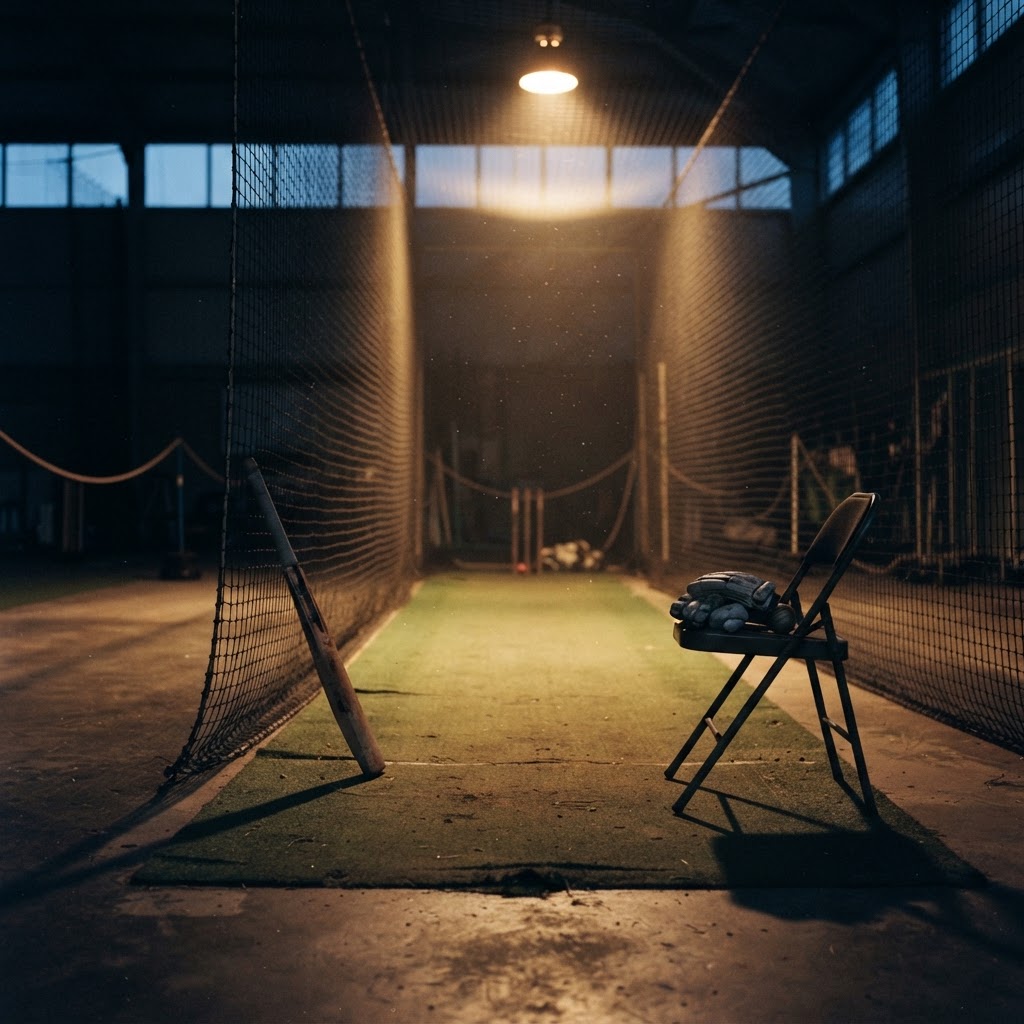
There is a particular kind of dedication required to play cricket in November. Not the warm, sun-drenched dedication of a Saturday afternoon at your home ground with a tea spread waiting. No — this is a different beast entirely. This is pulling on your whites under fluorescent strip lighting in a sports hall changing room that smells faintly of rubber mats and someone else's liniment. This is carrying your kit bag through a car park in the dark. This is winter nets.
And honestly? It is one of the most purely cricket things you can do.
There is no crowd. No scoreboard. No opposition. No result. Just a bowler, a batter, a strip of artificial turf, and the sound of ball on bat echoing off gymnasium walls. In those sessions — unglamorous, unwitnessed, often uncomfortably cold even indoors — something important happens. The game gets into your bones in a different way. You are not playing for anything except the thing itself. And if that does not tell you something about why people love cricket, nothing will.
What Winter Nets Actually Are
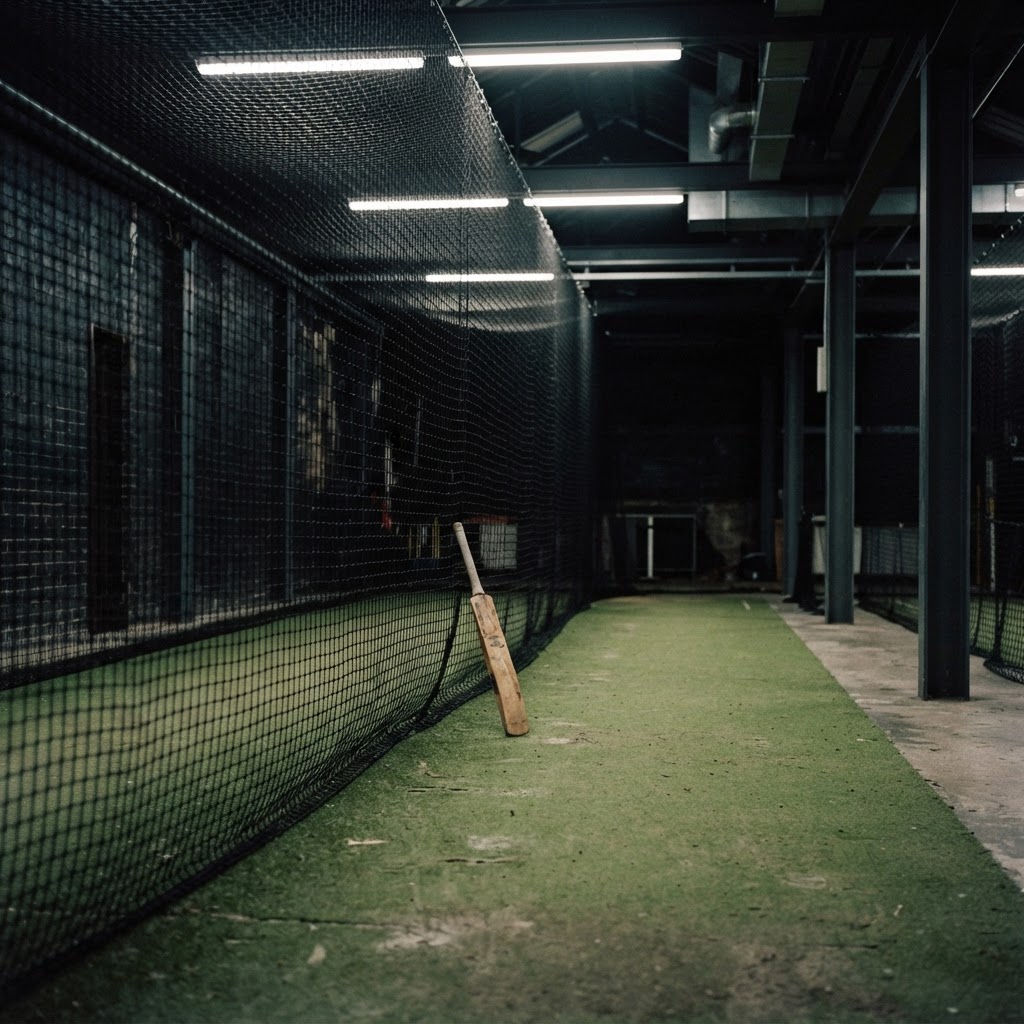
For anyone who has not experienced club cricket from the inside, it is worth explaining what winter nets actually look like at grassroots level. Most clubs will book a sports hall, leisure centre, or dedicated indoor cricket facility for a block of weekly sessions running from roughly November through to March. You pay your share, you turn up, you bowl and bat in rotation, and you go home.
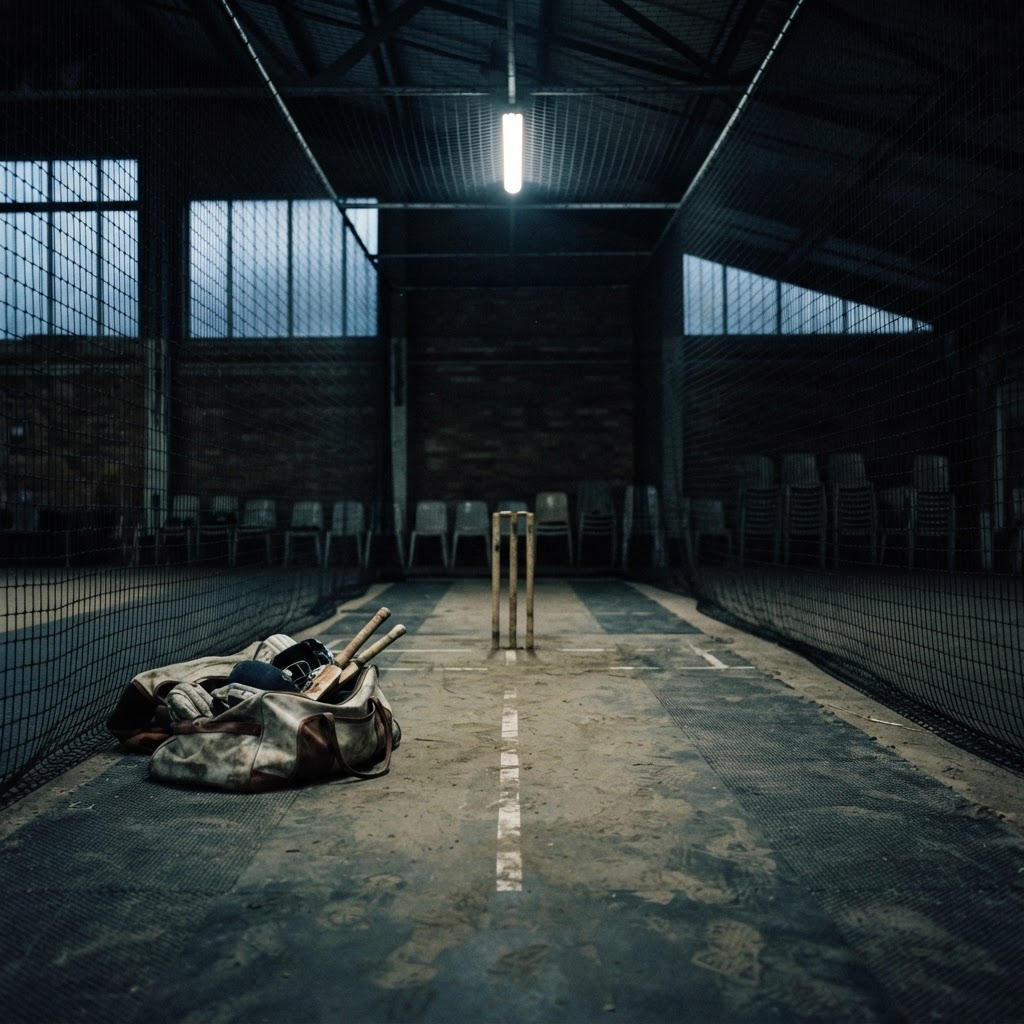
At professional level, indoor facilities are purpose-built, meticulously maintained, and staffed by coaches with high-speed cameras and biomechanical software. At club level, you are more likely sharing the space with a badminton group who finished ten minutes ago and left the shuttlecocks everywhere. The nets are fixed or hanging. The surface is a strip of green that behaves nothing like real grass. The lighting is whatever the leisure centre considers acceptable.
And yet. It works. Players genuinely improve in these sessions. More importantly, they stay connected to the game through the months when there is no game to be connected to. Winter nets are cricket's way of refusing to let go of you — and your way of refusing to let go of it.
The Coaching Dynamic That Only Exists In Winter
Something shifts in the coaching relationship during winter nets that does not happen in the heat of a season. When there are no matches to worry about, no batting positions to protect, no team selections hanging over every session, a different kind of learning becomes possible.
In summer, a batter working on a technical change is taking a risk. Change your trigger movement in May and you might cost the team a game in June before you have had time to bed it in. There is always a tension between what helps you long term and what the team needs right now. Winter removes that tension completely. You can break things. You can experiment. You can look genuinely terrible for six weeks while working on something that will make you significantly better by April.
Good coaches understand this window. The best club coaches use winter nets not just to run drills but to have honest conversations — about a batter's weakness against the short ball, about a bowler's tendency to front up under pressure, about the mental habits that cost players runs and wickets when it matters. Those conversations almost never happen in season. There is not the time, and there is not the safety. Winter creates the space.
There is also something to be said for who shows up. Not everyone does. Some players drift away in October and reappear in April expecting to walk back into the team. The players who turn up to nets in November, in the dark, for no immediate reward — those are the ones who tend to be reliable when it matters. Coaches notice. Captains notice. The culture of a cricket club is built, in no small part, in sports halls on Tuesday evenings in January.
The Art Of Batting In The Nets
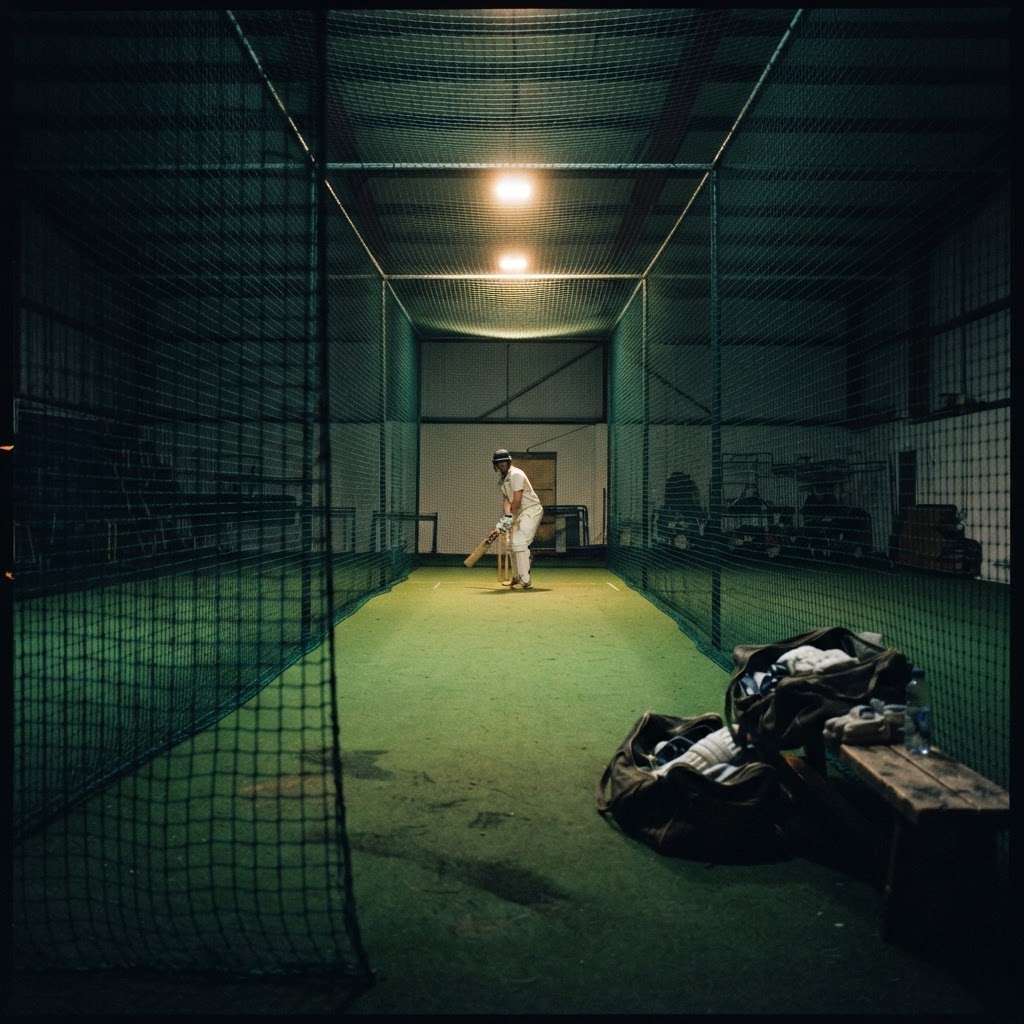
Batting in indoor nets is a skill unto itself, and a slightly absurd one. The surface is faster and lower than almost anything you will face outdoors. The ball does not swing but it does nip off the artificial seam in ways that bear no relation to real cricket. The boundaries are the net itself. There is no running between wickets. The whole exercise is, if you think about it too hard, basically a simulation of cricket that is not very much like cricket.
And yet batters genuinely sharpen their hands in the nets. Footwork improves. Head position gets drilled into muscle memory. The hard, low skidder that indoor surfaces produce forces you to stay side-on and play late in ways that outdoor batting on slow early-season pitches never quite demands. Some batters who are technically loose outdoors actually look sharper in the nets, because the surface exposes their weaknesses immediately and repeatedly until they sort them out.
There is also the mental side. Facing a decent club bowler in a net — where they can bowl flat out with nothing to lose and plenty of ego on the line — is not always easier than facing them in a match. Some bowlers are better in nets than they ever are on a Saturday. They are looser, more experimental, more aggressive. Facing that, week after week, builds a kind of quiet resilience. By the time April comes around and you are facing them in the first friendly of the season, there is nothing new.
Bowling In Winter: The Quiet Obsession
If batting in the nets has its own particular character, bowling in them has something closer to an obsession attached to it. Bowlers love the nets in a way that is almost private. There is something about the repetition of run-up, delivery, feedback — run-up, delivery, feedback — that scratches an itch that match cricket never quite satisfies. In a match you might bowl fifteen overs if you are lucky. In a two-hour net session you might send down sixty or seventy balls. You bowl more in one winter session than you do in three matches.
This is where action grooves get reinforced. Where the seam position that you were told about in August finally becomes natural rather than conscious. Where the slower ball that always went down leg side starts landing on a decent length. Bowling is, at its core, a physical skill built through repetition — and winter is when you get to repeat.
Spin bowlers are perhaps the biggest beneficiaries of all. The indoor surface, flat and consistent, is a nightmare for batters but a laboratory for spinners. You can actually see the drift, feel the purchase, hear the fizz off the surface in ways that outdoor conditions — especially in England — rarely allow. Wrist spinners in particular tend to emerge from winters in indoor nets having developed deliveries they could not previously land. The conditions force precision. Precision builds confidence. Confidence changes how you bowl.
Why Winter Nets Matter Beyond The Technical
Here is the thing that does not get talked about enough: winter nets keep cricket clubs alive.
A cricket club is not just eleven people who play matches from May to September. It is a community — sometimes a very tight one — that exists year-round. Keeping that community connected through the winter matters more than most committees acknowledge. Clubs that run good winter programmes tend to have better retention, better integration of younger players, and a stronger sense of shared identity come the new season.
The car journeys to and from the sports hall. The pints after the session. The WhatsApp messages about who is bowling well and who looked terrible against the short stuff. This is the connective tissue of a cricket club. It does not look important from the outside. But lose it, and you lose something that is very hard to rebuild.
There is also something quietly beautiful about the commitment itself. Nobody is making you go. There is no crowd to impress, no match to win, no rival club watching. You go because you love the game, because your teammates are there, because winter without cricket is just winter. That motivation — intrinsic, uncomplicated, genuine — is the same motivation that has kept cricket going for centuries. It turns out that even in a sports hall in the dark in November, you can feel it completely.
If you are the kind of cricketer who shows up in November when no one is watching, the Deadbat hoodie collection was made with that mindset in mind — understated, built for people who love the game for its own sake. EXPLORE THE COLLECTION →